
Introduction
Chhau is a unique tribal martial dance performed in the month of Chaitra across villages in the states of Jharkhand, West Bengal and Odisha, by mostly all-men troupes. Its practice in these three states gave rise to three different schools or styles of Chhau: Seraikela, Purulia and Mayurbhanj. However, in its foundational years, Chhau in all the three regions was under one administration and enjoyed royal patronage from the local ruling elites. Hand-crafted masks, along with elaborate costumes, weapons and extravagant displays of acrobatics and combat techniques, have since been integral to Chhau performances. With the passage of time, however, the practitioners of Mayurbhanj Chhau discarded the use of masks, thereby distinguishing this style from Seraikela and Purulia Chhau.
I vividly remember the first time when I witnessed a Chhau performance live, in early 2019: not in Purulia but in Delhi. What fascinated me were those masks that the dancers wore while performing acrobatics and mock combats as a part of their routine that was inspired by a very popular Hindu mythological narrative, Mahishasuramardini or ‘The Slayer of Mahishasura (the Buffalo-Demon)’. Quite interestingly, the representation of the Hindu deities and demons in those masks was symbolic and not realistic, a matter that I will take up later in this article. It was my fascination with these masks that led me to the village of Charida in December 2021. Popularly known as Mukhoshgram or the mask village, Charida is a village of artisans and craftsmen situated at the foot of the Ajodhya Hills in the Baghmundi block of Purulia—renowned for its rich history of making masks that are used in the Purulia School of Chhau.
Origin of the Art-Form
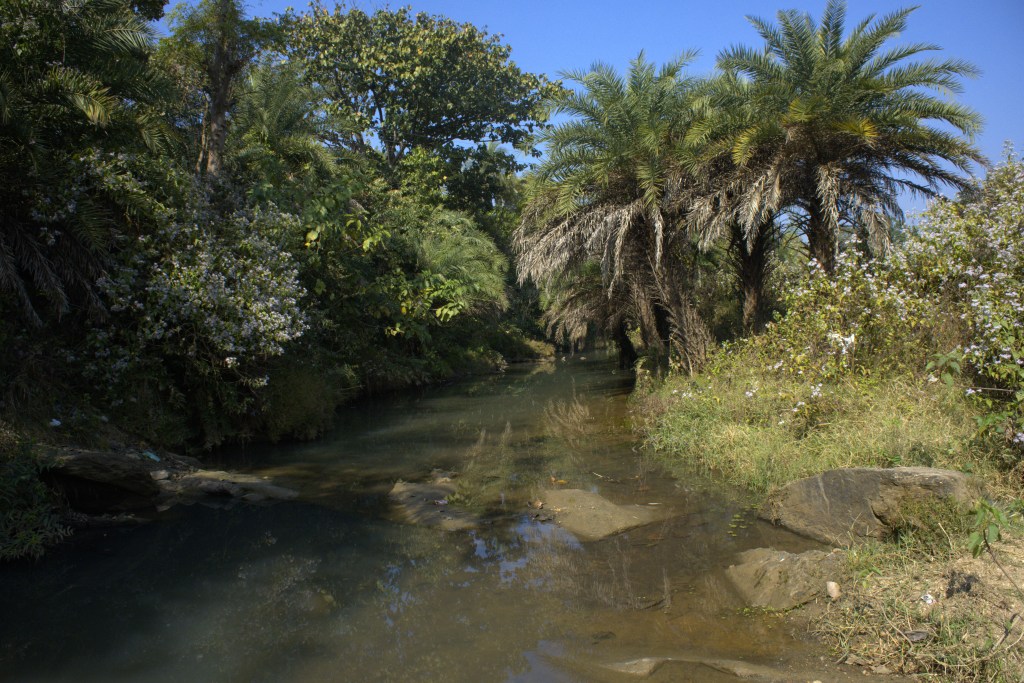
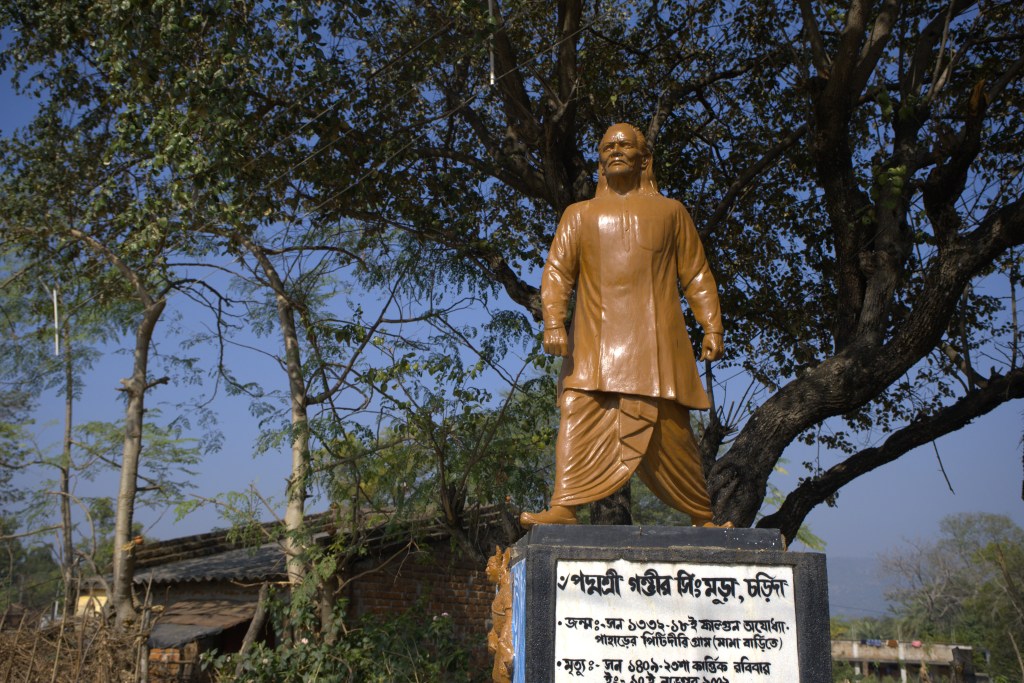
The village craft of making Chhau masks dates back to the reign of King Madan Mohan Singh Deo of Baghmundi, over 150 years ago, when he had invited around 20 Sutradhar families to settle down in Charida to make idols of Hindu deities to be installed within the palace compounds. Since then, the art form has been generationally transmitted within these close-knit families. However, the artform received wider recognition when Gambhir Singh Mura was awarded the Padmashri in 1981 for his contribution to the Purulia School of Chhau and with Charida receiving the Geographical Indication (GI) tag by the Government of India for Chhau mask-making in 2018. Gambhir Singh Mura’s fame inspired the entire village to pursue this traditional art-form passed on to them by their ancestors, as means of both preserving it and earning a livelihood. This also paved the way for the dismantling of gender and caste-based exclusivities as women and members of other communities also began to pursue mask-making as an occupation. At present, there are some 150 such families living in this village. A tributary of river Subarnarekha, which shares the village’s name, and the celebrated statue of Gambhir Singh Mura at the far end of Charida’s main road are the most treasured possessions of these artisan-families.
The Making of a Chhau Mask
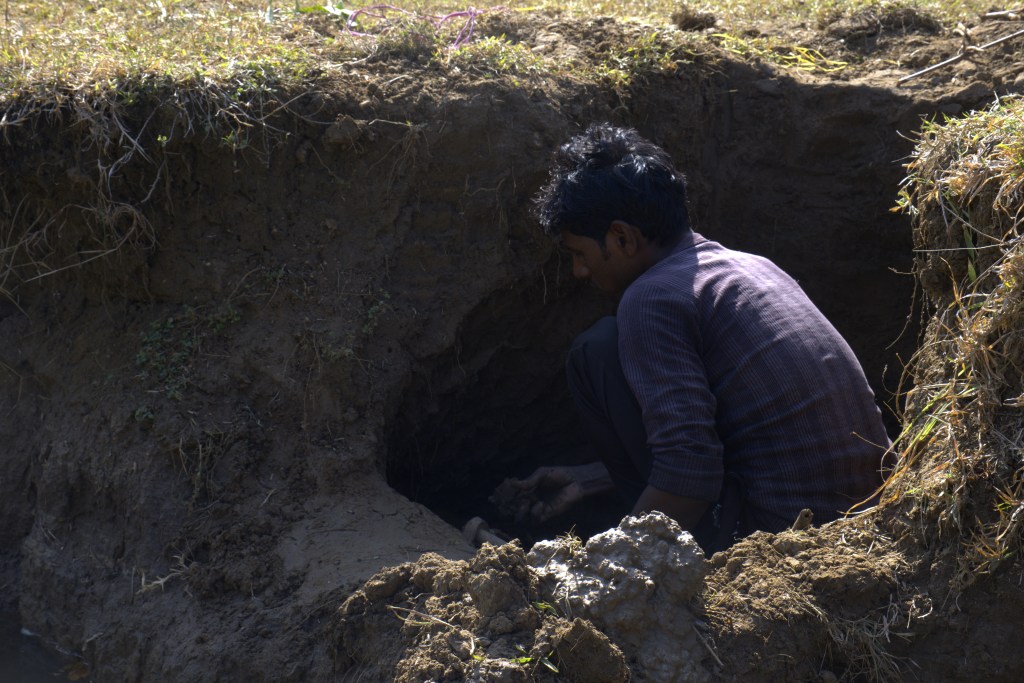
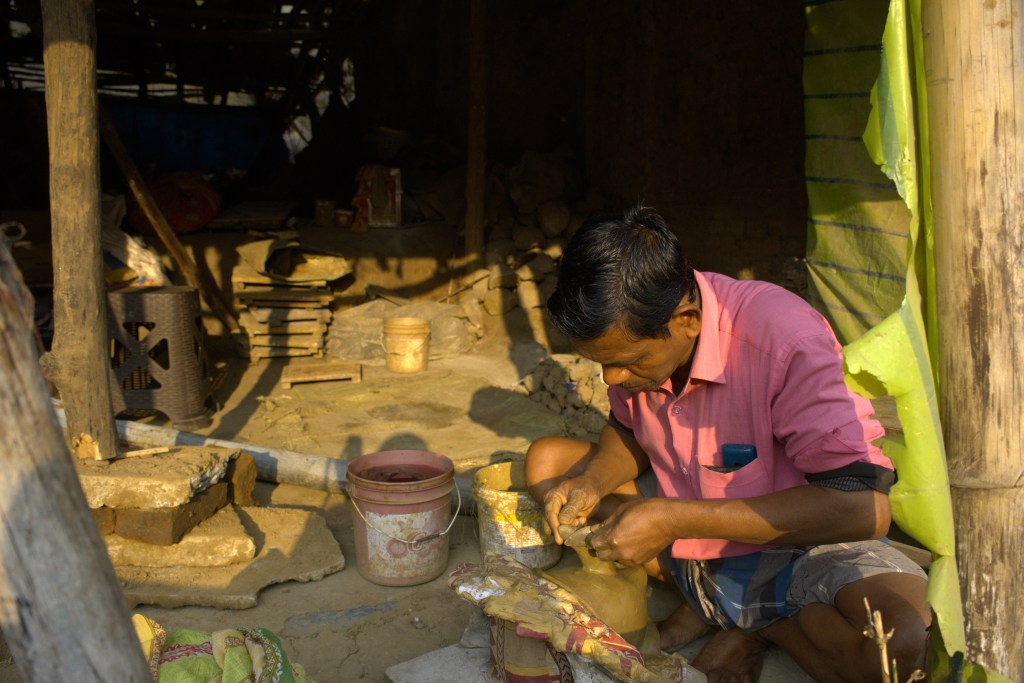
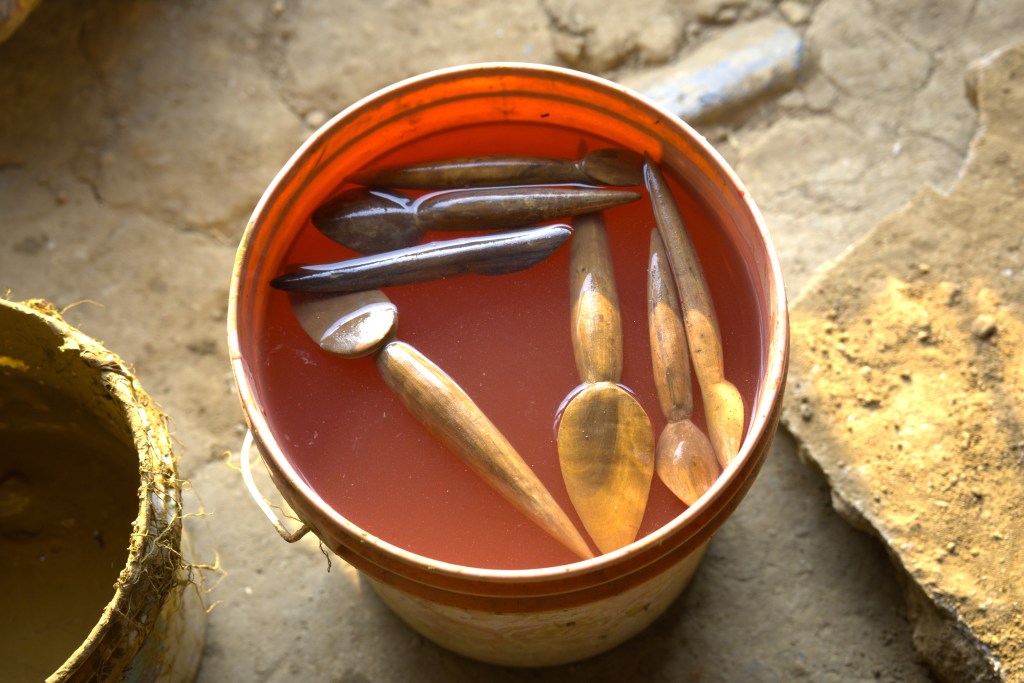
The process of making a Chhau mask from scratch is very elaborate and time-consuming. It can take upto 3-7 days to make a single mask by hand. The raw materials used are polimati (silt) sourced from the banks of the Charida river, khorimati (chalk), maida (flour), discarded paper, pieces of cotton cloth, and powdered tamarind seeds, along with colours and other decoratives brought from Kumortuli and Borobazar in Kolkata, respectively. First, the artists dig out polimati from the banks of the river and soak it in water in order to separate small pebbles, rock granules and other unwanted solids. Once separated, the soil is moulded into a mask by hand. The use of moulds is fairly recent but it greatly reduces the time taken to make each mask, increasing the rate of production quite substantially. Ashes from burnt wood are then smeared all over the mould to act as a layer between it and the final mask. For the next layer, maida and water are mixed to make an adhesive to which small pieces of old paper are added. Almost 16-20 coatings of this paper-adhesive mixture is applied to the mould. A piece of cotton cloth dipped in polimati gives the final coating of the mask before it is left to dry in the sunlight. Once dried, the mask is polished using thapis (6 to 8 inches-long wooden tool with a small diamond-shaped top and a handle), before the moulds are scraped off and the hollowed-out masks are ready.
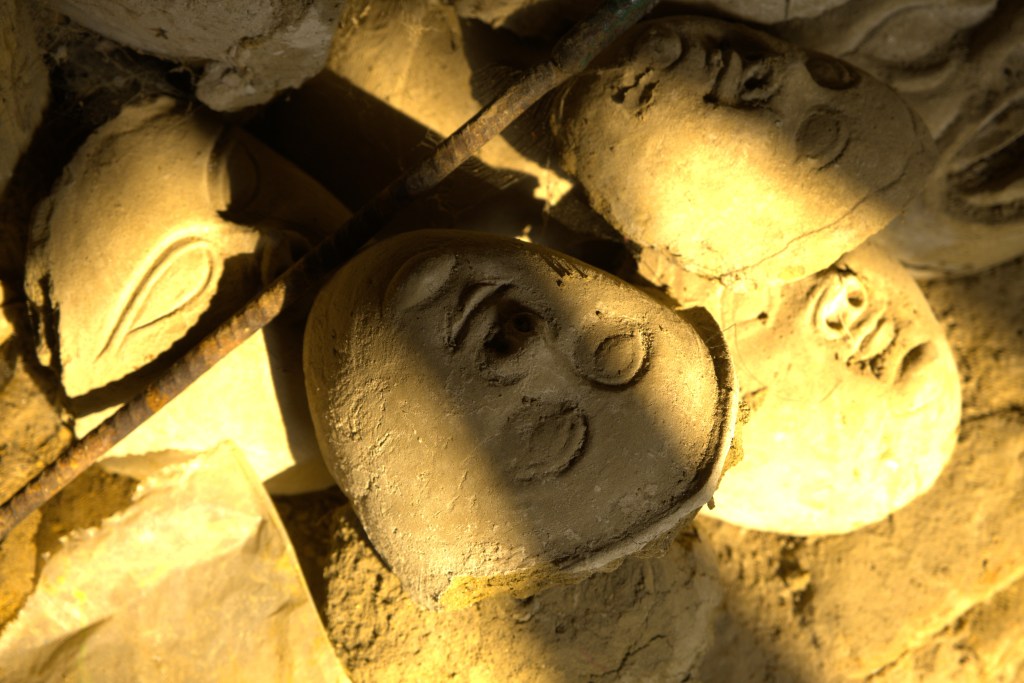
These hollowed-out masks are once again sun-dried before colours are applied. For the first background tone, a layer of khorimati is applied on the mask. Dry powdered colours are mixed with an adhesive made from powdered tamarind seeds and water (to increase the longevity and lustre of the colours) and then applied to the masks. Once the primary colour is set, the artist paints the general facial features followed by meticulous details, representing the mighty gods and demons, before letting the colours dry. Thereafter the headdresses (made of mostly foil and glitter) are further embellished according to the description of mythological characters which they seek to portray, before the masks are sold to a Chhau troupe or an enthusiast of folk-art.
Symbolic Representations in Chhau Masks
The colours and detailed attributes of the masks symbolically represent the various characters as described in the texts such as the Puranas, the Mahabharata and the Ramayana. However, it is also evident that the exact description of the mythological characters is not always adhered to: colours are modified to increase visibility at the time when Chhau performances usually take place in local fairs and carnivals, that is between midnight and early morning. These minute but effective modifications of colours, to make the masks more visible and appealing when exposed to artificial lighting during these late-night performances, reflect the flexibility and adaptability of the art-form and the artists themselves.

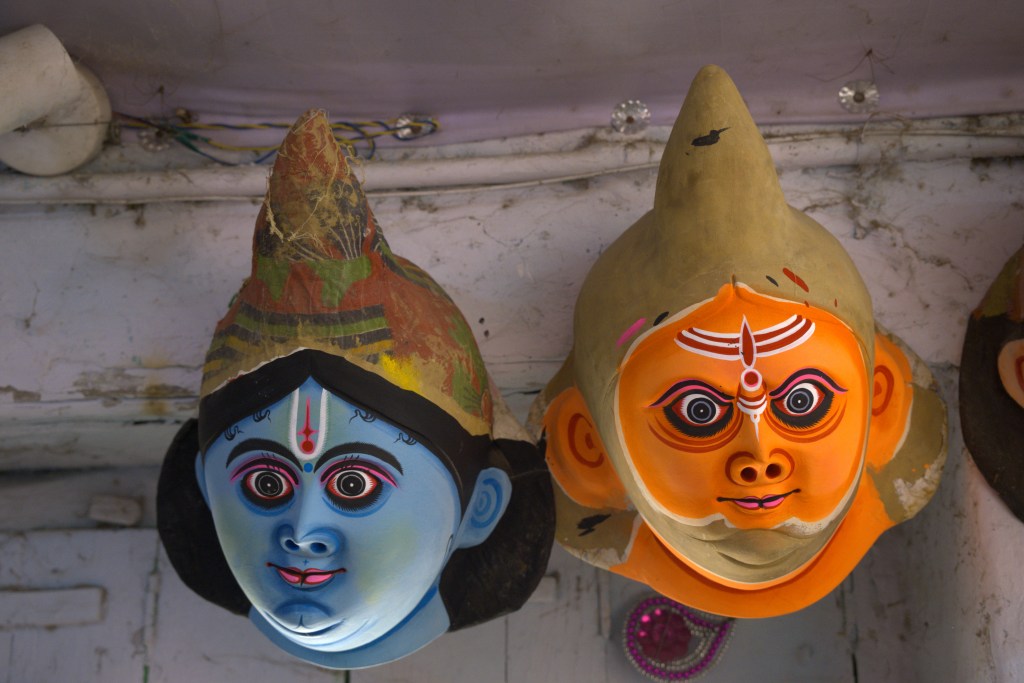
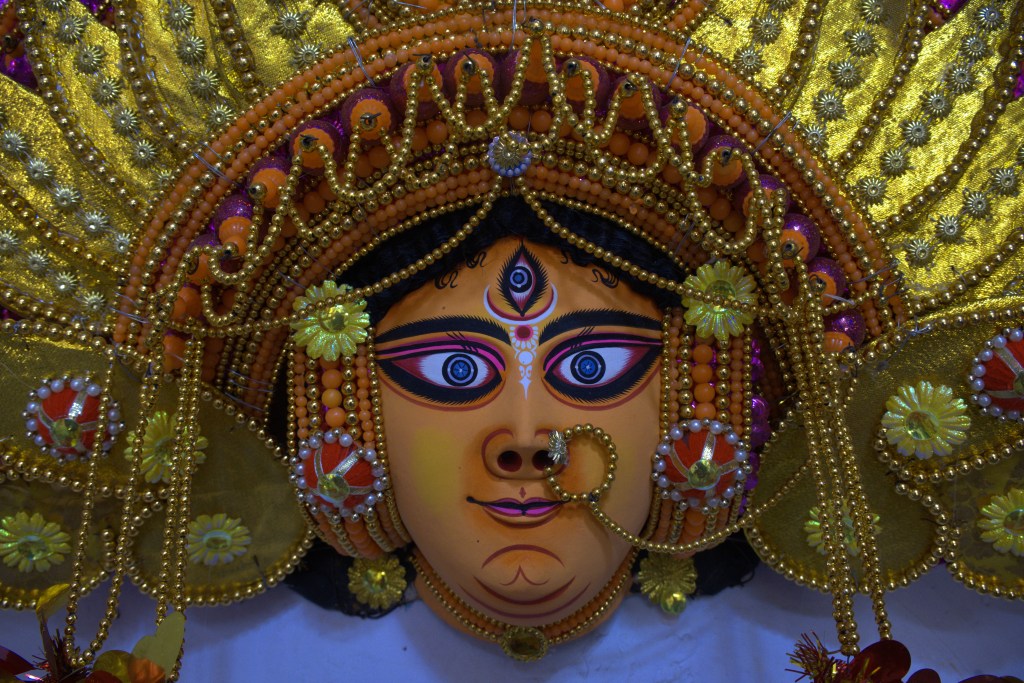
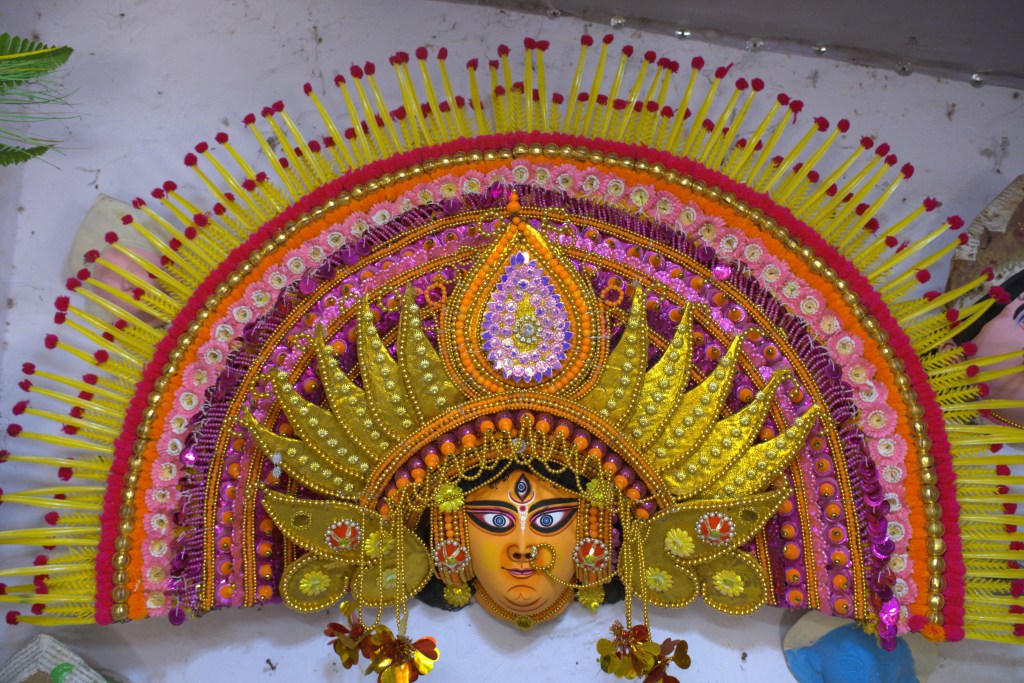
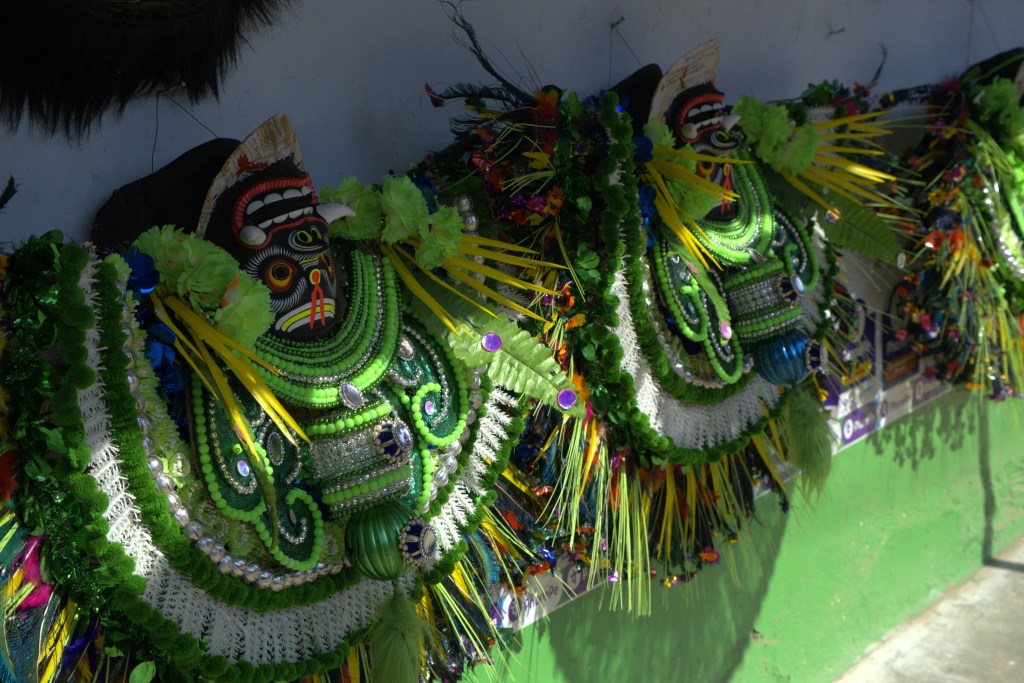
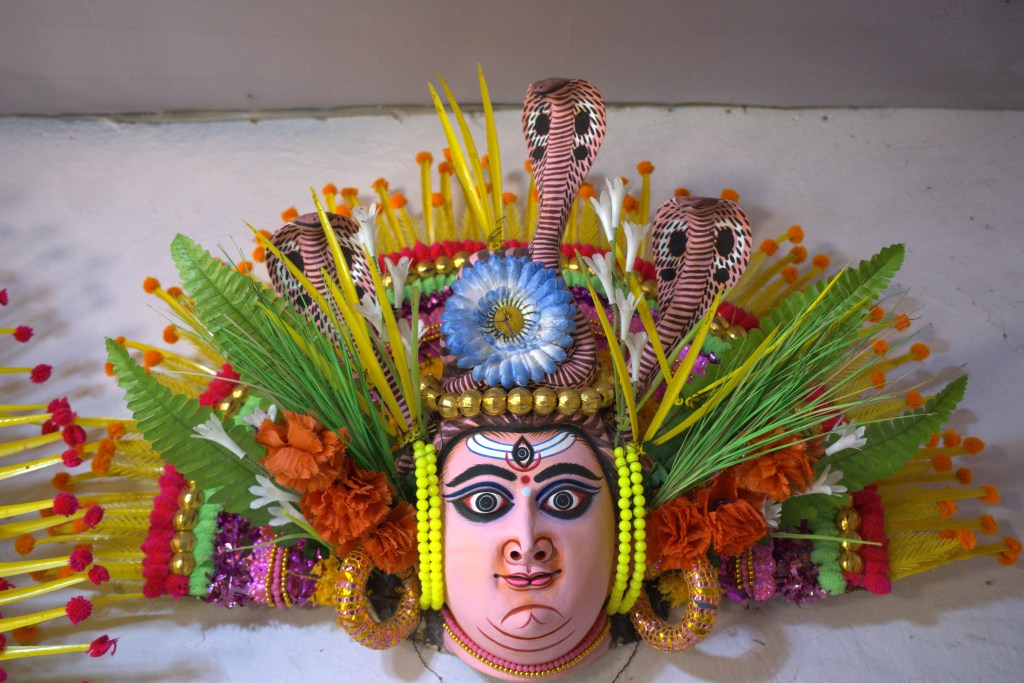
The masks of Durga and Lakshmi are painted warm yellow, often departing from the textual descriptions. Alternative colours like pink and light orange for a Durga mask are also preferred by artists at times, but not so much as the warm yellow version. In Chhau, the masks of Durga and Lakshmi are deceptively similar but what differentiates the two are the three eyes or trinetra in case of Durga. In a mask representing Lakshmi, the third eye is replaced with a tika. A mask of Saraswati is light blue in colour with dizzy, half-opened eyes, slightly different from the mythological description of Saraswati as white-coloured to represent purity, knowledge and tranquillity. Identifying a Ganesha mask is relatively easier because of the elephant trunk and a trident-shaped tika on his forehead and is either indigo or pink in colour. However, the elephant trunk in the Chhau model is raised upwards, almost perpendicular to the mask, leaving a wide gape in contrast to the popular representation of Ganesha’s trunk in a resting position. A Kartik mask is mostly painted pink with big round eyes, in contrast to the traditional description of the deity as yellow-skinned, representing youth and strength. A slim moustache on a Kartik mask is added on request. Interestingly, the most preferred colour for a Shiva mask in Chhau is also pink, with snakes tying up his jata or dreadlocks over his forehead, a far cry from his description as karpura gaura or camphor white in the Shiva Purana.
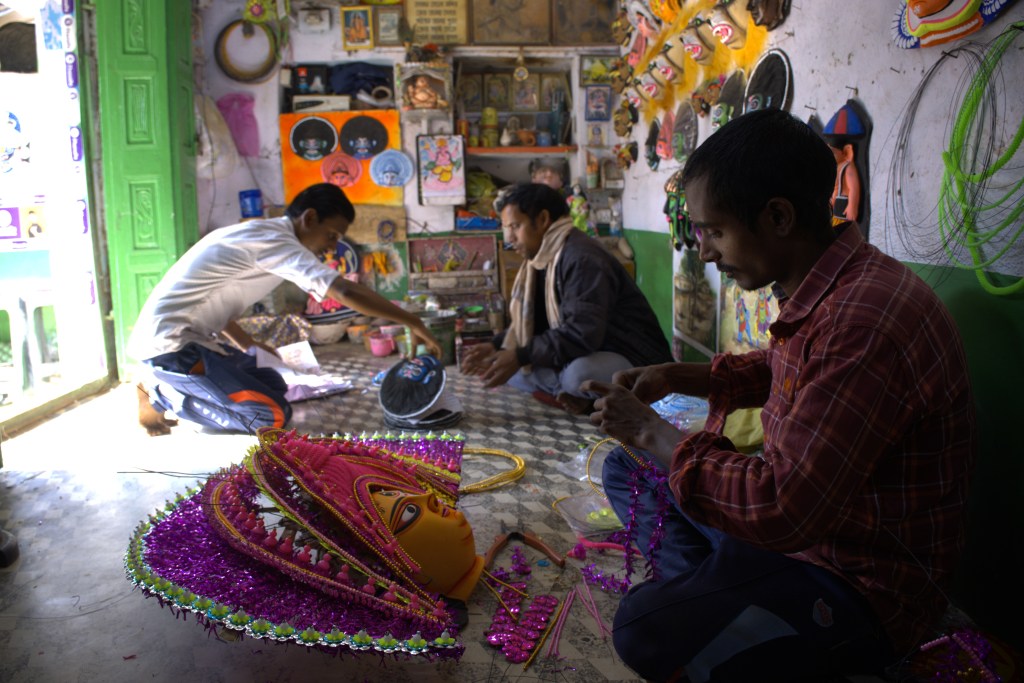
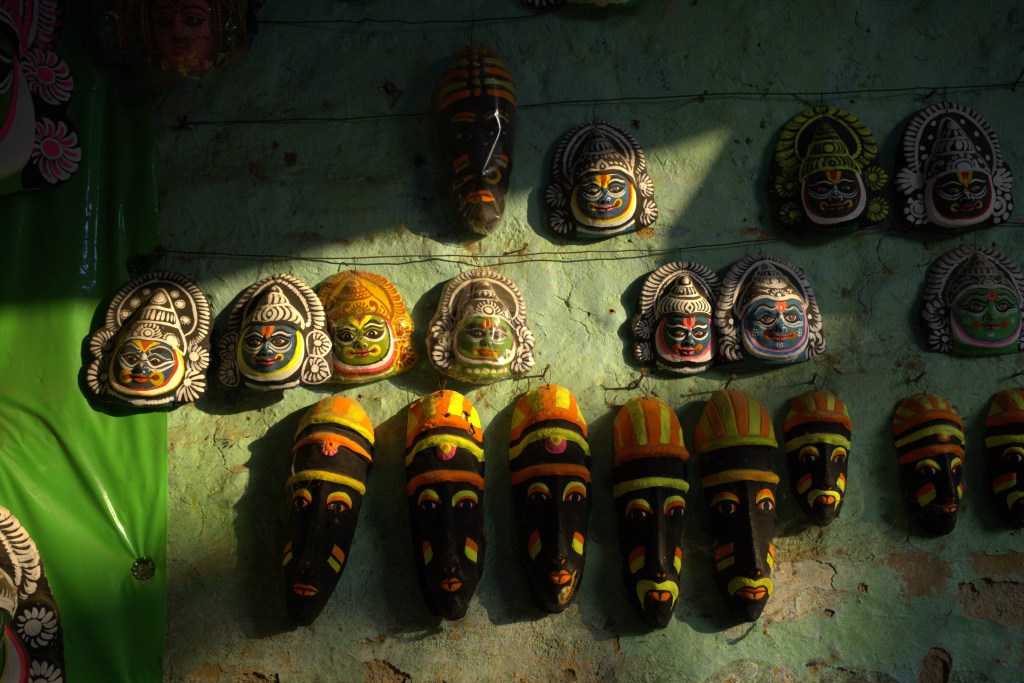
Masks representing popular sages like Parshurama and Durbasa are painted saffron to symbolise sacrifice. In the case of Durbasa, an important detail is his blood-red eyes representing anger, which however, sits well with his conventional mythological description. Masks of Asuras or demons are mostly painted green, blue and red. Quite evident here is the Indian society’s relentless obsession with associating darker complexions with something eerie, symbolic of human vices like anger, greed, hatred and ego. This is very well substantiated by these artists’ choice of colour and the stereotyped facial features of these villains in the form of wide blood-red eyes, a thick nose, wide open jaw with protruding canines and occasionally even a thick moustache.

The Art-Form Today
Ajoy Sutradhar (22), a fourth-generation mask-maker at Charida, has learnt the art of mask-making from his father, Manoranjan Sutradhar (55). When asked about whether he considers to pursue a different occupation ever, he says, “Why would I? I love the work. I have been seeing this process of making a mask from scratch and painting them all my life. I first saw my grandfather, then my father work at this same place since my childhood. I enjoyed being a part of it. I fell in love with the process since I was young. This is an art-form as well and if we do not carry this forward then who will?” The large masks for the dancers are only in demand in the month of Chaitra (April) when most of the Chhau performances take place in Purulia, while the masks that are prioritized in the workshops nowadays are the miniature souvenir masks, to cater to the increasing demand by the large number of tourists who flock to the village during winter. However, it was consoling to listen to Ajoy and understand his sense of concern and responsibility for preserving something which has a lot of meaning for him, more than what the tourists see while attempting a favourable bargain to buy their artworks as souvenirs.
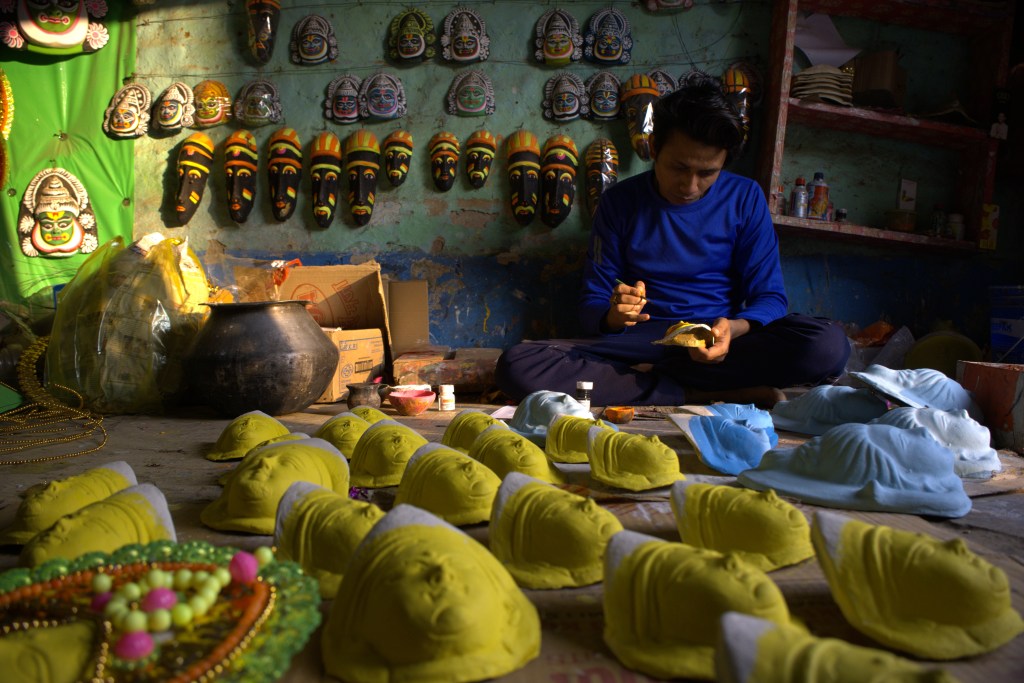
Gourab Sutradhar (18), who had started learning the work since he was 10 says, “When my father was young, he neither had the resources nor the support to pursue quality education. In my case, though support was not the issue, the money my family earned was not enough to afford a good private tutor for a mediocre student like me. But fortunately, I love the work and am willing to pass it on to the future generations.”
The Mask and its Market
For most tourists in Charida, while these grand Chhau masks are sure to find places in their mobile-phones and cameras, they are found very rarely in their shopping bags. What is most sought after among them are the smaller souvenir masks, as I have mentioned earlier. According to Ajoy, this increased demand, due to the sponsored publicity of this village by the Department of Tourism, Government of West Bengal and various social enterprises like Banglanatok dot com through the annual Chhau carnivals held across Purulia and folk festivals in different parts of the country and abroad, has led to increased competition among the artisan-families in the village.
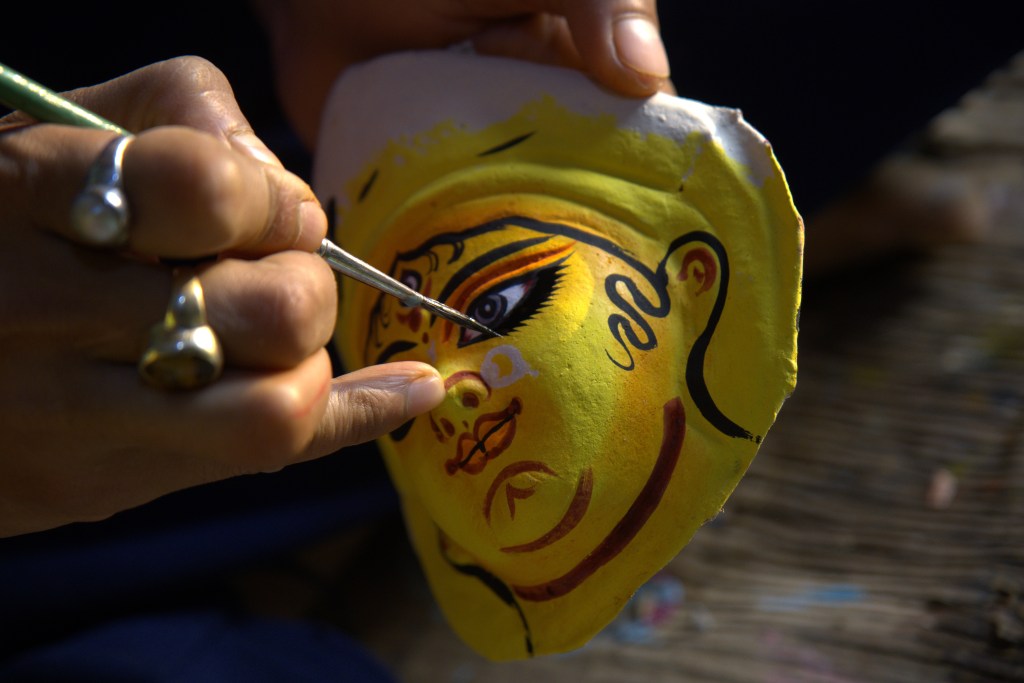
Ajoy says, “The profit margin in these souvenir masks has declined significantly due to the presence of a large number of sellers in the street selling identical masks. Besides, customers do not even care how intricate the work is. They do not even have the time to see and appreciate the effort we put behind each mask. What matters is the successful bargain of a slightly bigger mask at a slightly cheaper rate. Uniform prices for similar categories of masks would have solved the issue. With uniform prices, the competition would also have been healthy, at the same time providing incentives to the mask-makers to improve their product quality to ensure better sales, thus better margins.”
The problem of having a large number of mask-makers with little or no influence on the prices of their artworks is more critical than it might appear. Durga Charan Sutradhar (61), father of Gourab, who has been making these masks for more than 50 years now, explains the problem with a very simple example: “If a seller asks for Rs 50 for a small souvenir mask, the customer will try to bargain it down to Rs 30. Even if this seller denies this transaction, there will definitely be sellers who are willing to sell apparently identical substitutes of a lesser quality for even Rs 25.” The failure of the customers to discern the significance of high-quality masks, made by artists with more labour and time, thus results in minimal and deferred returns.
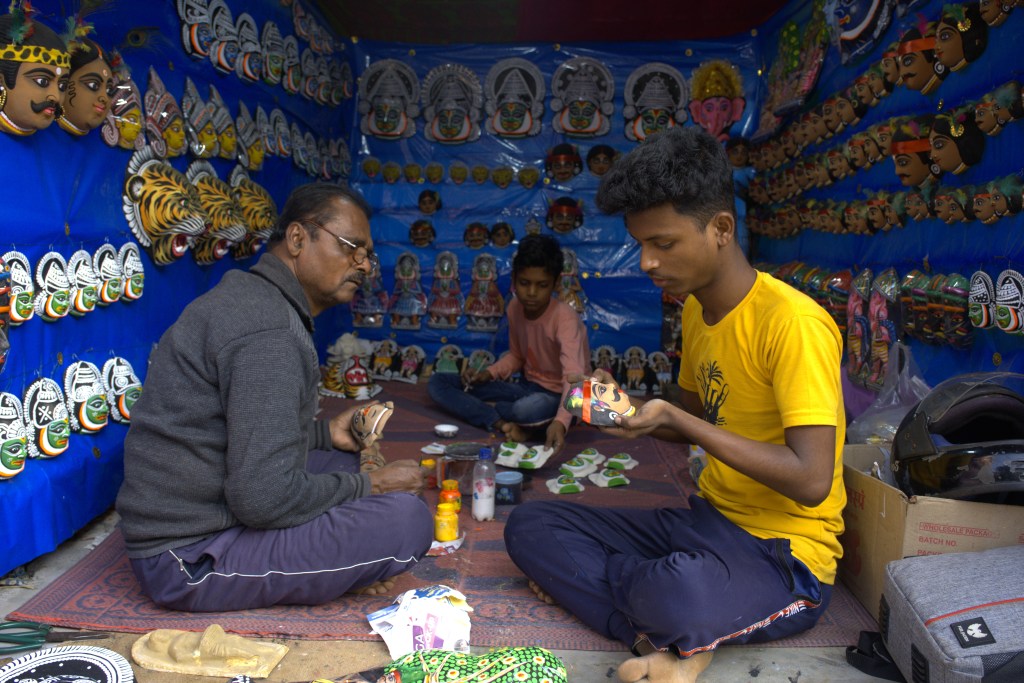
Besides, the sale of these masks is seasonal. Revenue declines with lesser number of tourists in the summer months. The demand for Chhau masks among Chhau performers is also seasonal. The performers generally order these masks before spring so as to get those prepared before the performance season. The price of a set of Chhau masks can range from Rs 40,000-2,00,000, depending on the number and quality of masks in the set. Interestingly, these masks are completely eco-friendly, durable and remain performance-worthy for a few successive years. This means that a set once bought by a Chhau troupe will last for at least a few years if handled with care and minor modifications when needed. Sadly enough, in this particular case, the sustainability of the product has been affecting the sales and profitability of the art-form adversely with declining number of Chhau troupes and receding enthusiasm among the younger generations to pursue this dance-form as a profession. More importantly, with the pandemic at its peak, no Chhau performance took place for a year. Tourism faced a major setback as well. Consequently, the demand for masks and the revenue generated by their sales had both plummeted.
A Dying Art-Form?
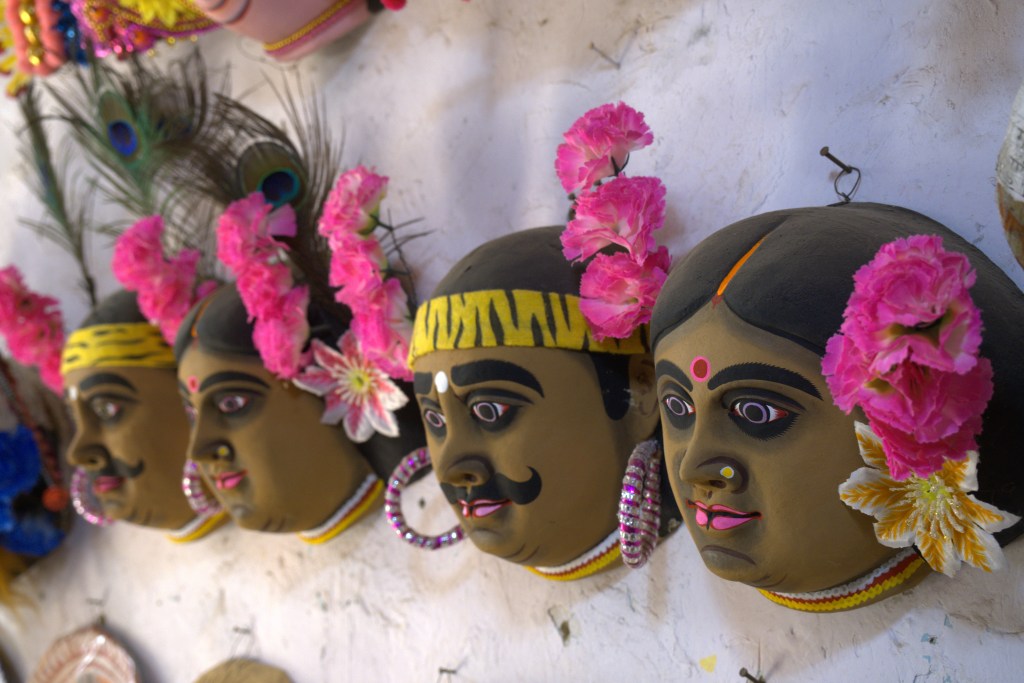
It might seem that the art-form of Chhau mask-making is dying due to the decreasing profitability and limited demand in the market. However, with further scrutiny, it becomes evident that the art-form itself is not dying out but its nature and purpose are undergoing a change. Most masks are now made to cater to the urban tourists’ demands. The focus has shifted from making large Chhau masks that depict various characters from the Ramayana, the Mahabharata, and the Puranas to the creation of small souvenir masks representing not only stock Hindu deities but also stereotypical ‘tribal’ figures which are highly sought after. Colours in these souvenir masks are no longer symbolic, nor are the attributes, which are rather chosen to fit the customers’ tastes and preferences.
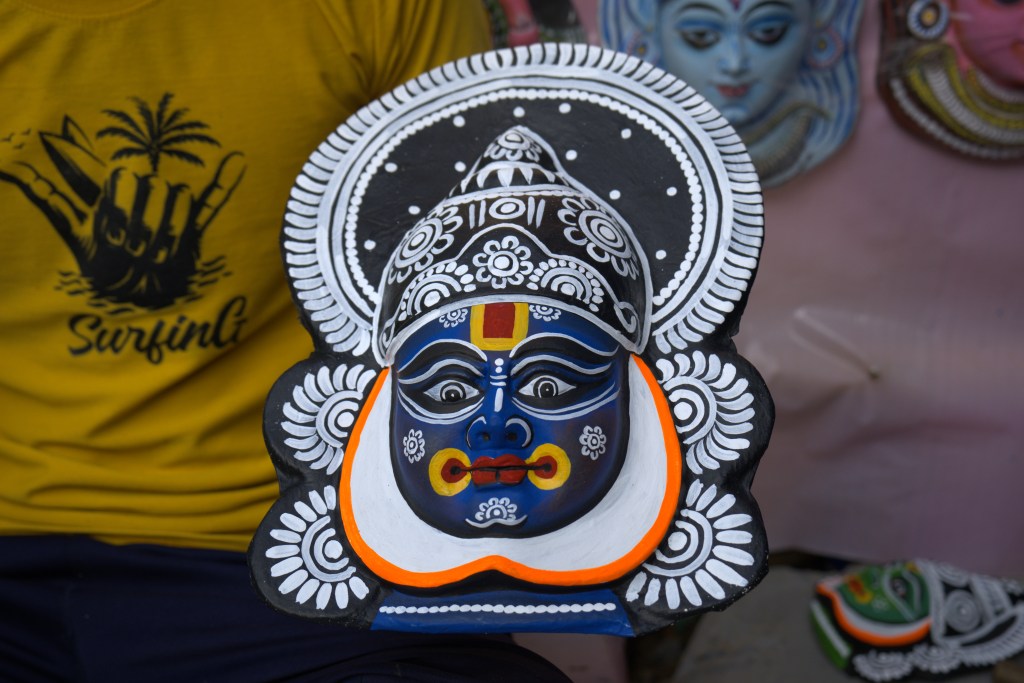
For example, the Chhau rendition of the Kathakali mask which was displayed on almost all the shops in Charida was painted light orange or dark blue and not usually green as is the case in Kerala. As Gourab says, “This is because no one wants to take a green-coloured mask as a souvenir for their home décor.” The tourists are hardly interested in the stories behind the masks. They are inclined to take home something that is representative of their stay in Ajodhya, home to several ‘tribal’ communities. Consequently, the most-widely purchased souvenir masks, inspired by the Kirat–Kiratin incarnations of the deities Shiva and Parvati, get marketed as those depicting ‘tribal’ couple: ‘Santhal-Santhali’.
Conclusion
The making of the traditional Purulia Chhau masks at Charida has undergone significant changes over the last few decades. The artisan-families’ priorities have shifted from making large sets of masks for Chhau troupes to the production of the relatively more profitable smaller souvenir masks that cater to the urban tourists’ demands and preferences. In the absence of uniformly regulated prices and collective bargaining power, these families are able to preserve the art-form in one way while losing out on their creative autonomy. The need for a more secure livelihood and the necessity of keeping alive the heritage of a complex and intricate art of making masks: for performance and not just as souvenirs, are at conflict. The artisan-families are faced with the dilemma of choosing between economic and cultural survival. The road ahead is not so clear for them.
 Lokayata
Performing arts of Odisha have undergone a long process of evolution and development. The term Performing Arts mainly encompasses three art forms of dance, music and drama. Odisha has seen a lot of ups and downs, sways and evolutions over the ages which have been of main significance in the history of the nation. The wonderful art notions on the temples and monuments, the beauties of the green valleys and hills and rivers and the Performing Arts of Odisha are certainly the state’s superiority.
https://www.indianetzone.com/51/performing_arts_orissa.htm
LikeLike