
January 2022 As the first light of dawn caressed the tranquil waters of the Ajay River, the world seemed to hold its breath in anticipation. A soft, golden glow spread across the horizon, gently nudging awake the sleepy village of Jaydev Kenduli (hereafter, Jaydev) nestled on its banks. The sky, a canvas of soft pastels, … Continue reading ‘It does not matter who you are. Everyone here is the same’: Fieldnotes from the Jaydev Kenduli Baul Mela—Debayan Das
Category: Rural India
MANIK BANDYOPADHYAY’S ‘A SPECIMEN’—TRANSLATED BY PRITHA BANERJEE
Manik Bandopadhyay (1908-1956) This short story by Manik Bandyopadhyay is set during the time of the 1943 famine in Bengal. It was a time of abject poverty, destitution, and breakdown of the moral economy of the society. The lack of rice and other staples compelled a father to sell off his daughter to an unknown … Continue reading MANIK BANDYOPADHYAY’S ‘A SPECIMEN’—TRANSLATED BY PRITHA BANERJEE
Syed Mustafa Siraj’s ‘Bharat Varsha’—Translated by Saukarya Samad

Syed Mustafa Siraj (1930-2012) One of the last sentinels from the golden era of Bengali literature, Syed Mustafa Siraj wrote effortlessly for both children and adults. His sheer versatility enabled him to craft riveting novels like ‘Neel Ghorer Nati’ and conjure the evergreen ornithologist-cum-investigator Colonel Niladri Sarkar. Renowned for his nuanced social commentary and vivid … Continue reading Syed Mustafa Siraj’s ‘Bharat Varsha’—Translated by Saukarya Samad
The Politics of Demolition and the Displaced People of the Tughlaqabad Village—Monjima Kar
Ruins of the Tughlaqabad Fort. The Tughlaqabad Fort, built around the 14th century, stands in ruins now, seven centuries later. What remains are the various settlements outside the fort enclosure. These settlements are equally old, built around the fort and inhabited by the working-class people ever since. While Ghiyasuddin Tughlaq might have found it difficult to … Continue reading The Politics of Demolition and the Displaced People of the Tughlaqabad Village—Monjima Kar
Mask, Maker, and the Market: Dispatches on Chhau from Charida—Debayan Das
A Chhau mask depicting Goddess Durga Introduction Chhau is a unique tribal martial dance performed in the month of Chaitra across villages in the states of Jharkhand, West Bengal and Odisha, by mostly all-men troupes. Its practice in these three states gave rise to three different schools or styles of Chhau: Seraikela, Purulia and Mayurbhanj. … Continue reading Mask, Maker, and the Market: Dispatches on Chhau from Charida—Debayan Das
When the Farmers Came Marching and Students Sang: A Participant Observer’s Guide to the Kisan Mukti March — Suchintan Das
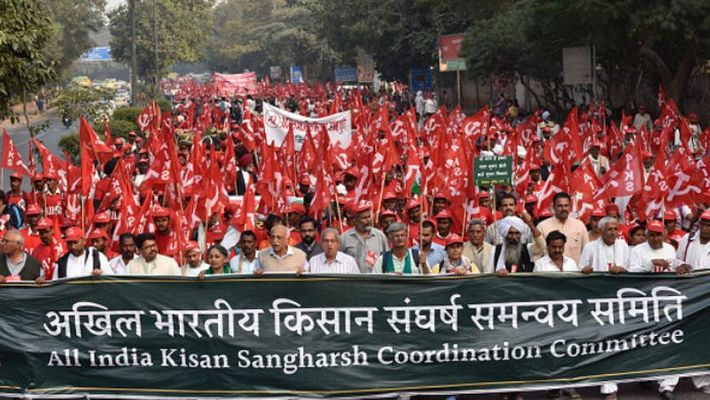
All India Kisan Sangharsh Coordination Committee (Image Credit: My Nation) The Kisan Mukti March, which took place in New Delhi on the 29th and 30th of November was neither an isolated occurrence nor an end in itself. It raised some crucial questions, which are yet to be answered. It was a historic happening in the sense that it enabled … Continue reading When the Farmers Came Marching and Students Sang: A Participant Observer’s Guide to the Kisan Mukti March — Suchintan Das
 Lokayata