
Everything men have made can be used as evidence for their
history; but in order to do so, we must find out how to interpret it.
R. G. Collingwood
Are folktales and myths important tools of writing history? Given the current socio-political situation in India, answering affirmatively to this question carries significant risks. There is a constant effort in our country to blur the boundaries between history and mythology, and between facts and folktales. It is understandable that many people are wary of giving legitimacy to folktales and myths as sources of history writing. This reluctance is valid, as history teaches us how myths are used to construct rabid ethno-nationalist ahistorical narratives, to justify unthinkable acts of cruelty, to dress up moral rot as national rejuvenation. While the use of folktales and myths are fraught with risks, we cannot discard them either. Myths and folktales can act as invaluable tools to unearth voices, narratives and truths long silenced and forgotten.
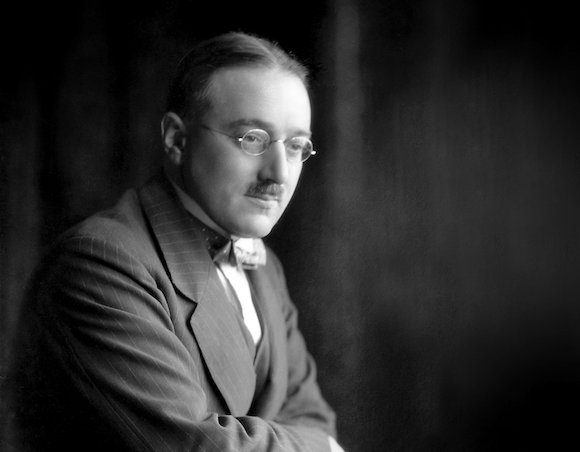
The reluctance surrounding myths and folktales among historians is not something new. Many historians from the 19th and 20th centuries, who aimed to align their subject with scientific disciplines, consistently avoided using non-traditional sources such as folktales, popular literature, or myths of a community. They put immense emphasis on institutional archival records. However, it is foolish to believe that archives always reveal the scientific truth. It must never be forgotten that no impartial god presides over the creation of an archive. Humans with specific socio-economic outlooks do, and they are not at all impartial recorders of history. It is also a folly to think only materials such as observations of Spanish conquistadores or diaries of British explorers could be used as ‘reputable’ historical sources, while myths and folktales of the Mayas and the Hausas are not worth paying attention to. However, just like raw ore is of no use unless refined to workable metal ingot, myths and folktales are useless unless they are refined using proper historical methods. This essay aims to present the thoughts of R. G. Collingwood (1889-1943) on this matter. A historian-philosopher and a pioneer in this approach, Collingwood significantly contributed to legitimise the use of myths and folktales as historical sources.
Attempts to analyse myths and folktales with academic rigour could be linked to the growth of nationalism in Europe. The romantic nationalists of the Long Nineteenth Century believed that a country’s land is intrinsically connected to its folklore, making it a crucial element of national identity. New attempts at analysis were launched. Among academics, philologists were the first to attempt to discover the origins of folktales. Friedrich Max Müller, the venerated Sanskrit scholar, was the most prominent of them.
The anthropologists soon presented a significant challenge to the philological explanation of the origin of folklore. By the mid-19th century, the anthropologists’ objections nearly delegitimised the formulations of Max Müller. Renowned anthropologist of the era, James Frazer led the charge. He insisted that there is no anthropological evidence that bears witness to the irrational, infantile society that philologists have imagined early human civilization to be. Therefore, it is completely unacceptable to claim that the emergence of these folktales during the formation of primordial mankind’s language to explain nature was due to their lack of understanding or reasoning. So, how did folktales emerge? Frazer formulated an answer in his book The Golden Bough. For the people of that time, these stories were not absurd, nonessential, or supernatural; rather, they played an important social role.
For example, the myths and folktales surrounding the post-harvest festival in various countries were not a juvenile attempt at explaining agriculture or harvest. Frazer argues that if one takes a closer look at the mythic tales related to harvest and attempts to comprehend the message they are conveying, one will notice that their main aim is not to praise a deity or the supernatural. They are vehicles made to spread ideals such as collaboration and solidarity. The true goal is to instill a collective spirit, through the form of a story, the collective effort and cooperation that a community needs to harness for the harvest.
Scholars studied folklore from a distinct perspective from the late nineteenth to the early twentieth century – from the perspective of psychology. Sigmund Freud was a key figure in the establishment of the contemporary psychological approach of interpreting myths. Freud’s most renowned work regarding this was Totem and Taboo. Freud and later Carl Jung, another famous psychologist, ascribed the origins of myths and folktales to the light and shadow of the human psyche, rather than the growth of language or the need for social development. They argued that people create myths as a response to phobias or desires present in their subconscious minds. According to them, this allows us to understand why there are so many parallels between mythologies of different civilizations. Myths and folktales, like individuals’ anxieties and desires, are essentially the same — no matter the distance in space and time. Of course, Freud did not fully disregard society. He creatively reinterpreted previous social ethnographic data to see how social psychology creates mythology and folktales. Carl Jung further expanded on this, concluding that myths are but collective subconscious dreams of mankind.
Now, let us examine Collingwood’s perspective on this matter. He, while acknowledging the contributions made by philologists, anthropologists, and psychologists, nevertheless insisted that only the discipline of history holds the key to understanding them. His reason was simple: all other disciplines are trying to understand the phenomenon of myths through the lens of the natural sciences. He argued that this approach is fundamentally flawed, as it presumes the possibility of objective evaluation of myths from a primary, impartial scientific viewpoint. Collingwood, echoing E.H. Carr’s observation of history writing, asserted that in matters such as myth-analysis, individuals often selectively choose data to align with their own hypotheses.
He demonstrated that even a person as credible as Freud ignored or outright misinterpreted empirical data when interpreting the nature of myths. Collingwood observed that during the colonial era, what people carelessly dismissed as ‘superstitions of savages’ contained actual historical facts and realities. Collingwood summed up his critique thus: “To sum up: the naturalistic method contains two pitfalls. First, it ignores detail in order to generalize; secondly, the generalizations that it fabricates tend to be mere expressions of emotion, not conclusions drawn from evidence. The maxims of a sounder method must guard against both of these dangers.” Collingwood based this ‘sounder method’ on two maxims.
First is the maxim of Spinoza. The maxim of Spinoza, according to Collingwood, commands a historian not to condemn or dismiss or deride what seems at a first glance a mere superstition or fishwives’ tale. He wrote, “Obedience to Spinoza’s maxim would mean that every phase and every statement that imply in the student a contempt for the belief or custom he is describing, every hint of ridicule or disparagement in his account of the facts or in the theory that he invents or accepts to explain them, and every trace of patronage or superciliousness towards people whose mind he is studying — all this must go.” When analyzing myths, Spinoza’s maxim encourages students of history to maintain a professionally dispassionate yet warm and sympathetic approach.
It asks them to shed smugness as men of science trying to poke and prod into ridiculous belief systems and stories of ‘savages’ and asks them to adopt and give effort to stand in the shoes of the believers of these myths and stories to understand where they are coming from. Collingwood, who famously said, “All history is the history of thought”, urged through adherence to the maxim of Spinoza to try to think without passion and without prejudice as the people who make and believe in the myths and folktales do. He argued that by doing so, it is possible to trace the thought processes through which these myths are born, enabling the historian to discern kernels of factual truths embellished with fantastical elements.
The second one, the maxim of Bishop Butler teaches us, “Things and actions are what they are and not another thing.” We should quote Collingwood’s explanation of this method in its entirety. Collingwood wrote, “To accept this as a rule of method is to formally recognise that our study is historical, not naturalistic, in character. It means recognising that the subject matter about which we are thinking consists of facts taken as facts, not of facts taken merely as instances. Thus, if someone wished to construct a naturalistic sociology in which it was proved (for example) that wars had always had the same kind of cause, such as an economic one, he would take the Peloponnesian War, the Crusades, the War of the Spanish Succession, and the Napoleonic Wars and point out certain common characteristics in them all. These common characteristics would be what interested him. Other characteristics, peculiar to one of these but not found in the rest, he would ignore; and thus, in his treatment of wars, the differences between different wars would disappear, and any one war would figure merely as an example of sociological generalisations equally exemplified by any other. For the historian, these ignored peculiarities would be important for the same reason that makes them unimportant to the naturalistic sociologist: namely, because they are peculiarities and thus reveal the special historical characteristics that make one period of history different from all others.”
In summary, Collingwood strongly disapproved of the attempts by philologists, anthropologists, and psychologists to generalize myths. Jung tried to conflate myths surrounding Christ and Mithras; Freud tried to forge a non-existing connection between Atenism and Judaism; Max Müller arbitrarily connected the solar myths of India and Europe in an effort to show a civilisational link; and Frazer tried to do the same regarding fertility cults and myths surrounding Osiris and Adonis. Collingwood, adhering to Bishop Butler’s maxim, asserts that these myths “…serve as a clue to the right method of interpretation.” The method is to reconstruct, with all the evidence at our disposal, the social structure from which such myths sprung. It is thus a historical method — one proceeding not by abstraction and generalisation but by the reconstruction of fact in all its details.
Collingwood concludes by asserting a close relationship between the two aforementioned maxims and the concept of historical method, which enables proper analysis of myths. Butler’s maxim makes a distinction between history and natural or naturalistic science. In that specialised sense, science proceeds by leaving out certain details in order to arrive at abstractions about which generalisations are possible; history, on the other hand, attempts to reconstruct concrete facts using every detail of its material. Philologists, anthropologists, and psychologists have deliberately adopted the method of ignoring details and identifying differences in order to adapt natural science methods to the study of myths.
All such attempts are sure to face failure for the simple reason that man is man and not nature. He is a thinker, not a mere object for contemplation. The only way for man’s myths to become the object of human knowledge is through historical methods adhering to the aforementioned maxims. Collingwood provides an example to illustrate this point. It is worth quoting at length here : “The most interesting British example is perhaps that of the ‘fairy hill’ at Mould in Flintshire, where it was said that a ghost in golden armour used to ride at night round the hill, and when it was opened in 1833 there was found in it a burial of the later Bronze Age, richly furnished with amber beads and other things, among them a golden breastplate for a pony, which is now in the British Museum. A custom of story-telling can easily explain the ‘folk memory’ that preserved a record of the chieftain’s burial for nearly two millennia; any other explanation would require psychological hypotheses that a scientific mind would find unpalatable. This example, with others of the same kind, may encourage us to believe that the fairy tales we possess may well have come down to us, in some cases, from a like or an even greater antiquity. If our study of them leads us to believe that certain themes embedded in them are several thousand years old, there is no a priori reason to reject such a conclusion as absurd.”
Nowadays, attempting to extract academically sound historical narratives from myths, fairytales, and folklore, like the example given above, is a far more complex endeavour in this country than it used to be. Dangerous too. As previously mentioned, this could potentially legitimise the current trend in our country, which promotes myths and histories without subjecting them to rigorous refining methods. But in a country like India, whose traditions have always valued myths and tales as blank slates on which to inscribe historical memory — albeit with embellishment — we cannot ignore this tradition either. We must tread a middle path. This is a path that maintains scientific scepticism while simultaneously embracing humanistic sympathy. This approach steers clear of the broad generalisation and conflation of myths and histories, which aim to construct coherent narratives while disregarding inconvenient details that contradict them. Collingwood’s thoughts and his two principles could serve as valuable guides for us as we embark on this path.
Arkaprava Sengupta is a Guest Lecturer at the Department of History, Rabindra Bharati University, Kolkata
 Lokayata