
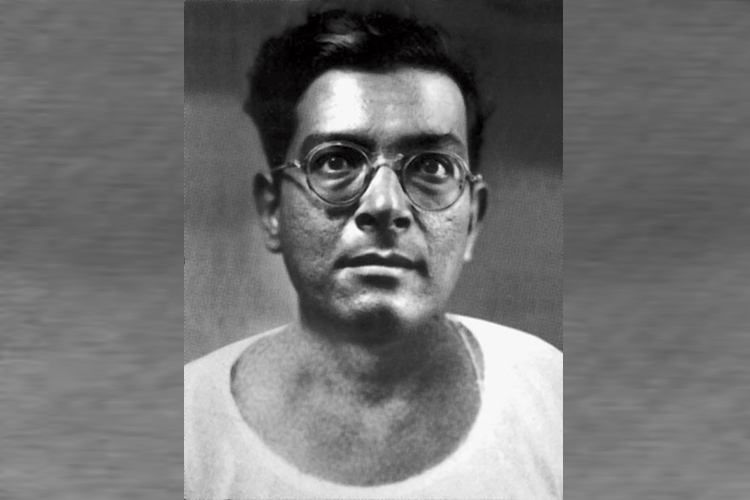
This short story by Manik Bandyopadhyay is set during the time of the 1943 famine in Bengal. It was a time of abject poverty, destitution, and breakdown of the moral economy of the society. The lack of rice and other staples compelled a father to sell off his daughter to an unknown trafficker. The story deals with the helplessness of the family and decaying human principles, selfishness, and indifference to human existence.
It was not just Keshab who was swept away by these conditions but many other people were mixed up in this chaos. There’s always a dearth of rice but a strategy was found to procure it – exchanging girls. A few sacks of rice grains, approximately two to three times the weight of the young lass and a few bundles of in-hand cash would be used to buy a few garments when required.
Even a few years back, Keshab had tried to find a suitable boy to give off Shoilo, his daughter, with a lot of jewellery, apparel and utensils. He was even prepared to throw in the towel if he could successfully sacrifice her to someone, abiding by the holy scriptures, his sacred religious virtues and sanctimonious rituals. But unfortunately, his entire property didn’t prove to be enough, so much so that he failed to get hold of even the most reasonable of customers. Shoilo’s beauty was quite average. Moreover, she was now in her formative years.
Searching without heed for his share of rice, his wife’s, his younger kids’, and Shoilo’s portions – a stomachful, a half-share, or even a quarter share – when is it that he gives his life up in the process? Keshab could not spare time to reflect on that. He married off his eldest son, who used to work in a school; his tutelage brought him forty-three rupees. The son passed away due to a special case of malaria. The malaria fever reached a hundred and six degrees, and the
torso-piercing medicines bought at the price of a few ounces of gold not being enough, a healthy young lad expired within five days. This kind of flu had previously been just an anecdote for Keshab.
One of Keshab’s daughters had also passed away, but this time due to an ordinary case of Malaria. This Malaria was Keshab’s intimate, homely enemy. For many years, he was also acquainted with quinine, the ammunition against his familiar foe. Hail Hari! The girl was unable to gulp down the raw quinine. A glutinous dough-like mixture formed as soon as the quinine dissolved in water.
Doctor Shodoy had said, ‘Are you mad! That quinine is of extremely good quality. It’s a new and improved version – very effective. Would I have taken so much money from you otherwise?’
When the girl died, Doctor Shodoy was enraged. Like a judge announcing his verdict, he said in a voice full of condemning reprimand, ‘All of you have killed her. Quinine? Can you recover from a fever only with quinine? Won’t she need wholesome food? You killed the girl by starving her – you had ravenously malnourished her!’
That girl was younger than Shoilo by just one and a half years. Her face was even more captivating than Shoilo’s. Today, we could have exchanged her for rice grains. At least a few heavy sacks of rice. For in-hand cash.
However, Keshab had no regret in his heart. Rather, he thought, the girl would be relieved after her death.
Shoilo was eventually bought by Kalachand.
Kalachand’s face was quite sweet. His words were even sweeter and righteous. His face was fair and pale. In his tiny eyes, you could see a peaceful and still listlessness. Kalachand looks at girls like the pious Vibhishan, who looked at Ravan’s wife Mondodari with clear conscience till Ravan had all his rights over her intact. Apart from this, there wasn’t much in common between Kalachand and Vibhishan. Around five years back, Kalanchand’s elder brother had died of unknown causes. Let alone showing kindness to his brother’s unclaimed second wife, Kalachand had coerced her into becoming the wife of a stranger. He did not belong to Kalachand’s familial household, but a discrete rented house a few miles away. That house was home to around ten to twelve girls.
Kalachand had rented the neighbouring house a few days ago. The total number of girls in both the houses counted to seventeen or eighteen. Kalachand’s Mondodari was now the mistress of both the houses. The lady had grown stout within a couple of years. Plump, rather fat. Wearing a bright white borderless gown over a bright white half-sleeve chemise made her look like a goddess from a socially respectable lineage.
After the famine increased the demand for girls and mofussils (small towns) began offering their girls at affordable rates, Kalachand turned them away. When he returned to his native village, Shoilo caught Kalachand’s attention. Although Shoilo looked like a skeleton at the time, would it be possible for Kalachand to catch hold of girls from such honourable households if he didn’t throw the net at the right time? Anyway, her scaffoldings were out because she was starving. Feeding her properly for a few days would cause her flesh to flow over. He had seen Shoilo before. Even though she was average-looking, Kalachand was not much bothered by that. It’d be enough if she was made up every evening. For the first few days, she could be assisted by someone, but after a while, she would learn the art of artful method on her own, attracting the pedestrians with beauty — compelling, colourful, and eloquent.
In a Kirtaniya’s heart-wrenching, melancholic voice, Kalachand had repented, ‘Aha, Chh, Chh! You had so much pain written in your fate, Chokkotti Moshai!’
Keshab kept staring with a calm, tranquil vision. Kalachand didn’t expect tears of sympathy to flow down his eyes, but it was absurd that they didn’t even well up once! He was a little astounded and insulted, though this was not the first time something like this had happened with him. Something had surely turned the people all over the country upside down. The flood of sympathy didn’t provoke any reaction. The whole country was bereft of all emotions. The sympathy couldn’t move the heart of stone. In the yesteryears, Keshab Chakrabarty would wail out in grief over the demise of sons and daughters at the slightest stir, he would describe in detail the woe of his misfortune while rubbing his eyes and wiping his nose, he would desperately try to arouse and inflate the song of his sympathies. Today, he seemed to be least bothered by it all.
Kalachand was roaming about from one city to the next village. He had witnessed several villages getting destroyed. But residing in one of those villages, he didn’t ever experience his own devastation. Nor did he face any consequences personally. How could he ever guess Keshab’s stolid, vacant sentiments?
Kalachand had brought some rice-lentils, fish and vegetables, sufficient for a one-time meal. Nevertheless, these people would sustain it over three meals. Let them! He just wanted to tweak their greed, make them mad with a little flavour on their tongue and a satiated stomach. He had also brought a saree for Shoilo. Shoilo’s mother had arrived wearing that saree. Shoilo’s chemise was nearly alright, even torn clothes would be enough to cover her shame.
Kalachand spoke on a variety of topics. He came to the main point at last.
‘Will you take Shoili? Will you treat her with care?’
‘Yes, I will.’
‘I am ached by her pain.’
Keshab was aware of the hearsay about Kalachand’s shelter for female patients. He appealed in a quiet overtone, ‘At your house? Will you keep Shoili at your house?’
‘Where will I keep her if not at home, Chokkotti Moshai?’
Keshab agreed and replied, ‘Give me some time to think. May God bless you son, give me some more time.’ Kalachand excitedly said, ‘I’ll come on Wednesday. I’ll come late in the evening, everything ready in my car. Nobody can tell whose minds sway which way. You may tell them,
Shoilo has left for her maternal grandparents’ house.’ Keshab said, closing his eyes, ‘Nobody will want to know, son. Nobody has time for these concerns anymore. If they get to know about Shoili’s absence, they’ll consider her dead.’
Shoilo was visible. So thin, she was now slightly bent. In the dark abyss of the heart, when the fright of childhood moved creepily, Kalachand felt a tinge of shiver. In the entire country, man’s death had turned out to be so easy and cheap.
The thoughts haunted Keshab’s mind. The blunt pain from the stomach had enraptured like a cloud of fog and dazed the mind – what was to be done, where was the answer to that, who knew! Rather than his mind, thinking about all this made Keshab’s body feel dizzy. In this village, Rakhal’s sister and Dinesh’s daughter were sold off in the same manner. Not to Kalachand, but to two other people. Yet, at the end of the day, Rakhal couldn’t survive. He had spread his putrid smell all around, expiring in his own room. No one even knows where Dinesh had escaped along with the few remaining members of his family.
Besides that, none of them were Bamuns. They were also not as respectable as Keshab. They were ordinary people belonging to the Shudra caste. Can Keshab do what they have done? Keshab’s heart started palpitating. His deceased body came alive. He could hear conch-shells, and murmurs of Sanskrit utterances in his deadlock ears, he got touched by bathwater and course silk on his scratched skin, and he inhaled the smell of flowers and sandalwood with his oblivious nose that was habituated by the fetid rotten carcasses. Right in front of his closed eyes, randomly floating
Chhatnatala, fiery oblations, objects of sacrifice, a choli-clad Shoilo, series of banana leaves served to a series of people, somehow he was reminded that he’s Shoilo’s father!
While devouring the rice gruel with arum leaves, it was as if Keshab’s breath was sucked away forever and vanished into thin air by the huge cauldrons set on the low flame and the inviting smell of numerous dishes cooking in the Kadhai, only to serve countless banana leaves in front of countless people. Who’s the father and who’s not – this question seemed inadmissible.
Shoilo’s Ma whimpered but didn’t cry. She dozed and whimpered as if humming a tune. It would feel like a bee had entered the room. Sometimes, Shoilo, her ears being sharp, could hear the words: Can’t Death come for you! Everyone dies, why don’t you! You ate your brother, your sister, but you couldn’t eat yourself up, you baneful creature! Die, you die. Die before leaving for Kolkata.
Shoilo’s tears had dried up. Agony, affliction, pride, honour – nothing nudged her heart anymore. It was as though she couldn’t even feel hunger. She only felt a thrill in her stomach when she thought of wandering about with Kalachand and getting to eat to her heart’s content, twice every day. The anatomy of her feminine body had left the abode of flesh and blood, only to end up as dry veins. Scratching her skin wasn’t enough; the oozing blood didn’t hurt any longer. However, chewing on the raw guava snatched from her anaemic little brother was still adventurous for her.
On Wednesday, after the sunshine early in the morning and a cloudy milieu in the afternoon, the evening was again clear-skied. During the twilight hours, Keshab Chakrabarty and his menage were invited to attend the ceremony where Doctor Shodoy’s grandson was to be fed his first morsel of rice. Kunjo Shehnaiwala, with his troupe and his sons, had always played the Shehnai in all ceremonies all across the neighbouring villages. After his demise, Shodoy had to call a Shehnaiwala from the Town Centre. Keeping his promise, Keshab attended the ceremony and somehow returned with his entire family, nearly falling on his sleeping mat. They understood for the very first time that eating to one’s stomach’s fill could almost suffocate one to death. They kept lying on the mat, half-consciously, till the latter part of the evening, as if they were passed-out drunkards. Puking once on the road and quite a few times at home helped Shoilo sleep without much disturbance. When Keshab’s stomach started paining, she was the one who rubbed and massaged him with dry hands. There was no oil in the house.
It was late in the night when his stomach stopped churning, the nerves of Keshab’s head were still throbbing endlessly. Kalachand arrived late, deep in the night. Keeping his car silently in the distance, he had brought a person along. Not only this alley, but the entire village was fast asleep. Only Keshab thought he kept hearing a faint Shehnai playing obscurely from Doctor Shodoy’s house.
Keshab cried aloud, ‘My son, Kalachand!’
‘Yes?’
‘How will I leave my daughter like this, in her marriageable years?’
‘This is the problem with your lot. Don’t you trust me? You tell me what to do now. All the goods are in the car. Three sacks of rice–’
Keshab kept mum. Kalachand glanced at his face with the flicker of his torch, observing his eyes. Just like a wild animal stares at a flash of light thrown at it, Keshab’s welled-up eyes kept shining bright, without blinking.
After waiting a while, Kalachand said, ‘It’s better for us to hurry up. I have brought these clothes for her, tell Shoilo to wear them. Should I send him to bring the goods over, Chokkotti Moshai?’
Whether Keshab ambiguously agreed, or interrupted him, remained unclear. Shoilo’s Ma whimpered resoundingly.
Kalachand ordered the accompanying person, ‘Go and bring all the goods with Bodyi and the others. Tell the driver to be seated in the car.’
Kalachand flashed the torch, pointing towards the ground. His entire body was frozen over in the dark. With the ensuing spotlight, the caricature of a silent, enervating theatrical proscenium was created in the room. Keshab was sitting on his toes with his back folded, his arms carrying the coloured saree, petticoat, and blouse brought for Shoilo. She was standing right behind him.
‘Then, give me one last permission, Son.’
Keshab’s voice seemed calm.
‘Tell me’.
‘You marry Shoili and then take her.’
‘Marry? Have you gone mad?’
Handing over all the clothes to Shoilo, Keshab held Kalachand’s hand. Defenselessly, he requested him. It was not that kind of marriage, the priest offering his prayers in front of ten people, with prenuptial agreements, witnesses, and giving a social mandate to the husband’s responsibility – not that kind of marriage. This was just for Keshab’s peace of mind.
‘I’ll just hand over Shoilo to you with Lord Narayan as my witness. Then, you can do anything with her. That’s your duty. Just allow me to fulfill my duty. Let me do this much.’
Shoilo’s feeble body was being carried inside the house by two young men. Let the villages get destroyed, but Kalachand was not naive enough to forget to bring accompanying men when taking away a village lass at midnight. How long would it take to pin a solitary man to the ground?
Frustrated with Keshab’s candour, he said, ‘Whatever you want, do it fast’.
Borrowing the matchsticks from Kalachand, Keshab lit up the lamp near the Holy Stone of Narayana in the corner of his room. Under the moonlight, in her yard, Shoilo dressed up in her new petticoat and blouse. The lamp had a little oil in it. Throughout the time when Keshab continued with the ‘daughter-giving’ ritual, keeping Lord Narayan as his witness, Shoilo was lost thinking about her father’s stomach ache which could have been immediately lessened if she had massaged him with the lamp oil. He wouldn’t have to suffer so much then.
In the wavering light of the lamp, Keshab started chanting prayers joining the palms of Kalachand and Shoilo. Kalachand was agitated and kept insisting, ‘Hurry up.’ He didn’t know about the God’s shrine in the room. He was aversive to the idea of joking with Gods and Goddesses in any capacity and was actually a little scared. His heart got overwhelmed. In the interiors of a peaceful and sacred household, the Lord residing with dried leaves and flowers on his water couch, the chanting of prayers by a holy brahmin, silent fields, the frightening midnight mystery of the barren mofussils of the hinterlands – all took hold of him. He cursed himself silently, thinking he shouldn’t have agreed to this old man’s madness.
As soon as the lamplight went out, Kalachand withdrew his hands. Shoilo’s palms, being on top of his for a long while, were drenched in sweat.
Kalachand’s torso was also profusely sweating. Wiping his face with his handkerchief, he held Shoilo’s hand tightly and dragged her out. He didn’t take his leave nor did he let Shoilo take hers. Of course, not because customers do not usually take leave from the shopkeepers, but simply because he wasn’t feeling too well. Shoilo was equally surprised.
Putting her foot on the uneven roads in front of her house through the jasmine and hibiscus plants, Shoilo forgot about this feeling. Removing her hands for the first time, she said, ‘I won’t go.’
When she pulled out her hands a few more times and attempted to cry aloud ‘I won’t go’, Kalachand stuffed her saree’s edges into her mouth and picked her up. For a few moments, that thin, feeble body exhibited enormous strength. With the recurrent prickle of thrill in her body, she frantically threw her hands and legs in the air and began to curve her torso like a bow. Even after the borders of her saree fell down from the grip of her mouth, she tightly clenched her teeth and made a ‘ggo… ggo’ sound. All of a sudden, she was still like a statue.
Hearing it all, Kalachand’s Mondodari angrily retaliated, ‘Why did you get yourself involved in so much commotion? Is there a lack of girls on this planet?’
‘I felt so impulsive.’
‘Impulsive! Really? Looking at that flat-nosed, dark-skinned, thin-boned girl, you got impulsive!’
‘Dhuttori! Not that kind of impulse.’
But Mondodari’s doubts were not cleared. She had lost all respect for men’s choices and their selection of girls, a long time back. That question was bereft of head or foot, awfully strange. Kalachand wasting his time thinking of Shoilo, and his overwhelming concern for the young girl strengthened her doubts. Mondodari, who wore a white gown on a white chemise and conducted herself like a beauteous Goddess, had eyes that now displayed a vengeful, dark vision.
The Doctor had come to see Shoilo. Light, expensive and nutritious food was bought for her. No other girl was allowed to go near her. Kalachand spent a lot of time with her.
One day, the matter cleared up.
Shoilo was getting back her healthy figure.
‘I was thinking of taking her home.’
‘Why?’
‘My mind feels restless. She ought to be considered my lawfully-wedded wife. Standing in front of the Lord, her father had chanted his prayers and wedded us. I suggest, let me take her home, she’ll stay in the corner as a maid-servant.’
A huge fight commenced between the two. A realistic, obscene, ill-favoured fight. Fuming with rage, Kalachand took a bottle of alcohol, went inside Shoilo’s room, and locked the door.
The next day, he went home. After consulting his wife for the rest of the day, he returned with his car to bring Shoilo, late in the evening. As soon as he entered, Mondodari pulled him to her room.
‘There are people in Shoili’s room.’
It was as if Kalachand’s mind had caught fire. He felt like killing Mondodari.
‘Other people! In the room of my lawfully– wedded– wife–’
Mondodari silently took out a fat bundle of notes and held it in front of Kalachand. He hesitated, but kept the notes in his palm and started counting the money carefully. After the counting spree got over, he felt as if he were tranquilized by some enchantment.
‘Who’s that?’
‘That’s Gojen. He has become rich by selling all that rice.’
Noticing the shuffle of notes, his silent astonishment, and the questions that were slowly appearing on his irksome face, she repeated, ‘I felt compelled. Is the money enough? He was looking for a rural virgin.’
 Lokayata