
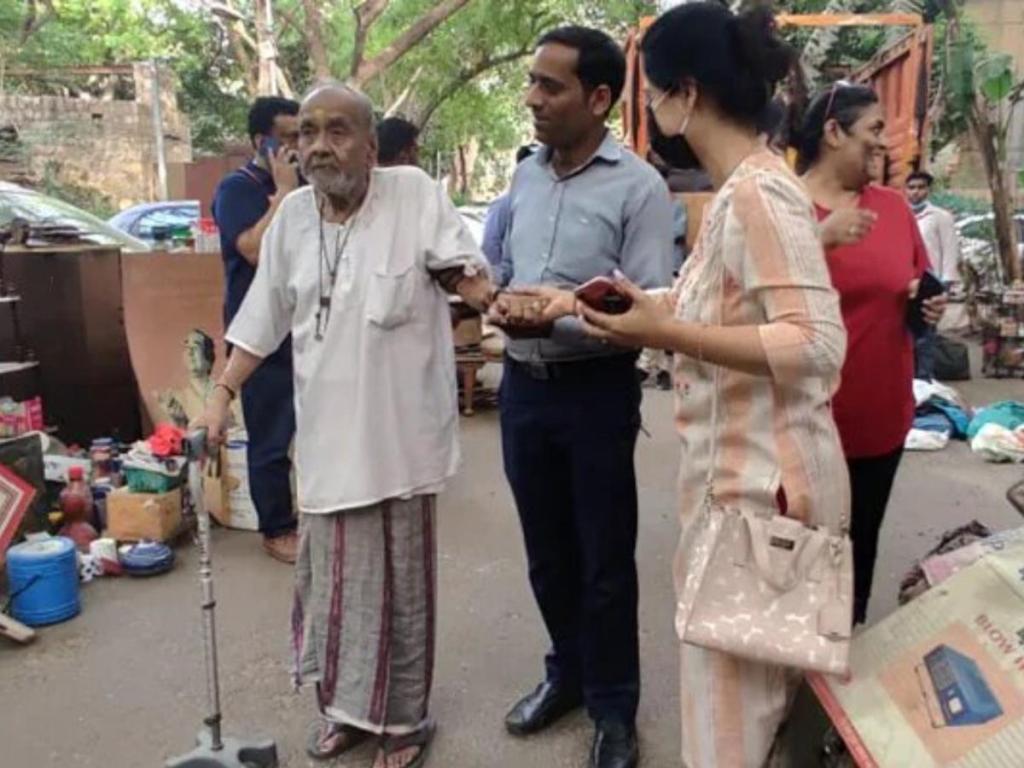
The insular world of classical arts rarely surfaces on the mainstream news-headlines in India. Yet, the eviction of Mayadhar Raut, the doyen of the Odissi dance form, from his government accommodation in New Delhi brought the fraternity to the fore of the news-cycle. As images of the 90-year-old struggling with his belongings horrified people within and beyond the artistic fraternity, many missed another uncomfortable question: if artists considered stalwarts within the field are meted out such treatment by the state, what must be the condition of others who have found similar fame quite elusive? While multiple waves of the pandemic battered the performing arts industry, its lower rungs went completely ignored, deprived of state support and socio-cultural capital to sustain their practice. Despite the efforts of a few influential practitioners and organizations like the Sumanasa Foundation, which focused on extending aid to marginalized artists, these drives were found wanting, given the sheer size of the industry and the depth of the crisis.
However, the COVID-19 pandemic merely accentuated the pre-existing fault lines and hierarchical inequalities within this field. While artists with generational capital (given the primacy to the ‘guru-shishya parampara’ aka the tradition surrounding the transmission of the secrets of the craft from the teacher to the disciple) and limited support from institutions like the Gandharva Mahavidyalaya or the Shriram Bharatiya Kala Kendra continued to thrive through online performances and workshops, the rest were easily forgotten. According to Kuchipudi dancer and PhD scholar Ranjini Nair, the tendency of the classical arts fraternity to operate in cliques even in gaining access to performance opportunities was simply transferred to the online space. Thus, any self-assessment or criticism of the attendant power dynamics and the fraternity’s problematic relationship with the state was conveniently evaded.
In order to understand those power dynamics within the artistic fraternity, a historical assessment of its fraught relationship with the state is required. A mosaic of different performing arts traditions has been in practice in the Indian subcontinent since the premodern times. The practitioners of these art forms were communally rooted within the hierarchically organized caste-based society. For example, the Isai Vellalar community of Tamil Nadu was one of the many communities engaged in classical music and dance. More importantly, these communities were patronized to offer their services either at temples or in royal courts. At the temple complexes, the ‘Devadasi system’ entailed the induction of women performers dedicated to the deity. The system eventually fell out of social acceptability, and as patronage wore thin, these women became vulnerable to exploitation and prostitution. By the time of independence, the Devadasi system was fully criminalized. Eventually, many of the women engaged in it were pushed towards domestic life. However, in post-independence India, the increasing focus on a ‘national heritage’ created the need for an underlying cultural repository that was created by many Gurus who sought to ‘revive’ these dance forms around the same time. ‘Classical’ arts flourished with direct patronage from the postcolonial state, whereby these art forms begun to be portrayed as representative of India’s cultural pride on domestic and international platforms. The modern democratic nation-state had successfully replaced the caste-based feudal powers as the sole patron of classical art forms.
Further, classical music and dance forms got embedded in the Indian popular consciousness with the help of state institutions like the ICCR, CCRT, Sangeet Natak Akademy etc., which offered scholarships and grants to practitioners from across the country. Moreover, artists empanelled with the ICCR were sent on tours around the world to promote Indian art and culture. Maestros like Birju Maharaj were etched in public memory as they got state-sponsored opportunities not only to promote their art but also to proselytize their ‘brand’. At the same time, due to the prevalence of constructs like the ‘guru-shishya parampara’ within the field—which made emerging artists completely dependent on the professional choices of their Gurus—newer names could seldom break through and emerge in public life. While it is undeniable that institutions like the Doordarshan and the CCRT enabled artists from geographically remote regions of India to build careers in classical arts, they also put a certain limit to what these artists could achieve, since most of the well-funded performances and tours were only within the reach of the most widely recognized dancers and musicians. This cyclical pattern of offering patronage to a select few and exclusion of the majority gradually entrenched hierarchies within the artistic fraternity that exist till date. Artists who had once tasted success continued to receive government funding, basking in a sense of complacency as they had ample space to curate and choreograph with minimal constraints. On the flip side, they did not feel the need to make the space more inclusive for artists of newer generations who wished to take up these professions as financially viable careers. For instance, dance festivals organized by the most renowned institutions like the Gandharva Mahavidyalaya or Kalakshetra are almost always supported by either the Ministry of Culture or public undertakings like the ONGC or the BHEL. The search for alternatives to these lucrative sources of patronage limit performing artists to mostly religious institutions, and concepts like Arts Consultancy or ticketed performances are majorly reserved for the most highly-ranked practitioners.
Given these conundrums and the refusal of the artistic fraternity to re-evaluate the deep inequalities within, the field of classical arts can be an extremely stifling space to inhabit. On the one hand, the fraternity is unable to critically engage with its own problematic history of appropriation (given the known fate of dancers from communities having hereditary means of access to traditions) and on the other hand, it has failed to stop itself from playing the role of the state’s handmaiden in embodying India’s ‘pristine cultural heritage’. This is slowly becoming a political burden for the field as the Sangh Parivar is seeking to further its own Hindu nationalist agenda by presenting a skewed idea of such heritage and utilizing all state institutions to achieve its heinous ends. Owing to this twin pathway of degeneration, the industry’s credentials and claims to excellence can sometimes be questionable. With the slashing of funding and support as the state continues to make empty claims of aggressively promoting India’s indigenous cultural heritage, the classical arts industry is facing an existential crisis. The ICCR has not accepted applications for the empanelment of artists since 2019 and the state-funded tours that once brought fame to the now renowned veterans have ceased. The post-pandemic economic slump has done immense damage to an already debilitated industry.
Therefore, the question that troubles younger generations intending to commit to the field is a simple one: will the classical art forms be able to find an independent foothold in the public consciousness and find avenues for sustaining itself financially without state-sponsorship? As the current political dispensation abuses classical arts for as means to fulfil its jingoistic ends, many of the stalwarts within the field, including a range of Padma awardees are either retreating when faced with these challenges or toeing the given political line. Since this tendency is coupled with poor investment in the field, marginalized artists are forced to fend for themselves with little or no support. Established dancers and musicians often lament the degradation in the form and the quality of work on social media. However, the problem perhaps lies in the fact that there exists almost no space independent of the state to sustain these art forms, and the commercializing forces only allow people with higher social status and financial privilege to take up these professions full time—often at the cost of genuine artistic prowess. Many, who recognize these problems and find value in their training, often end up disillusioned. Needless to say, if this field intends to look forward to a future of growth and not decay, it has to have a reckoning with its own problematic power dynamics and its long-standing muddled relationship with the Indian state.
 Lokayata
One thought on “Tribulations for the Future of Classical Arts in India—Arnaaz Zaman”