
“Can we turn our backs on equality? No government is legitimate that does not show equal concern for the fate of all those citizens over whom it claims dominion and from whom it claims allegiance. Equal concern is the sovereign virtue of political community-without it, government is only tyranny-and when a nation’s wealth is very unequally distributed, as the wealth of even very prosperous nations now is, then its equal concern is suspect.”
—Ronald Dworkin, Introduction: Does Equality Matter?
Sovereign Virtue: The Theory and Practice of Equality
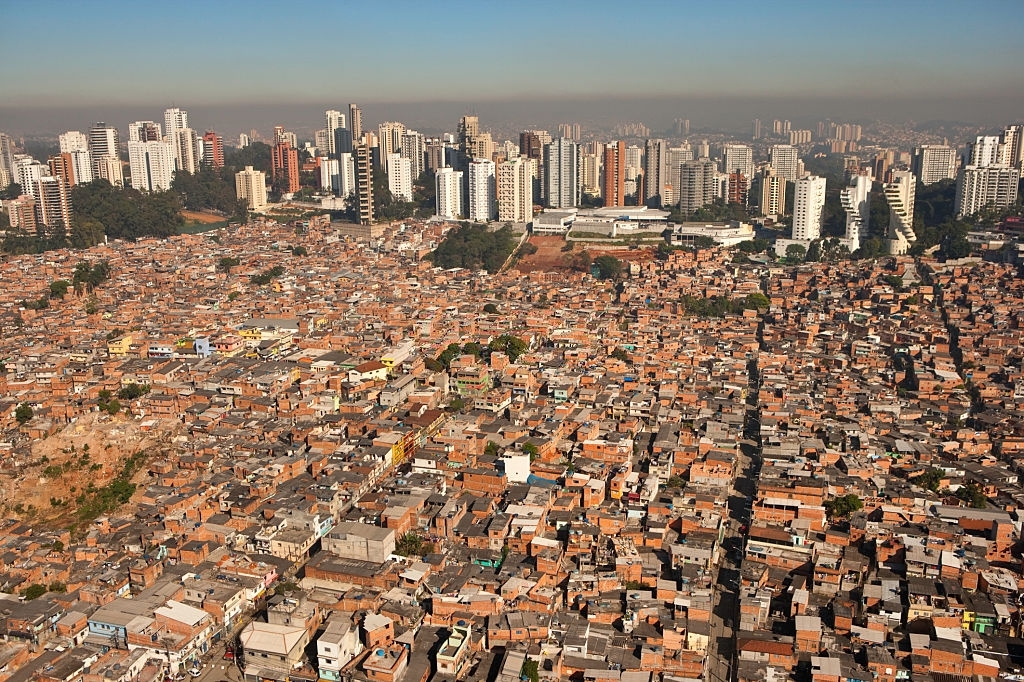
The above statement by the liberal-egalitarian jurist Ronald Dworkin unambiguously asserts the need to include an equal concern for all citizens as a sine qua non of sorts for a government, as well as signifying a further push for the centrality of equality in the liberal scheme of governance. Although governments officially continue to maintain a concern for equality, the tangible outcomes of equality-seeking measures in essentially market-driven economies have been undoubtedly dismal and mostly a subject of rhetoric. As elements like talent, merit and incentives enter into the larger calculus, the picture only gets murkier as what was earlier an uncontested appeal for equality has to now be balanced with a recognition of these factors, thereby tempering the equalizing zeal. As the novel coronavirus ravages the world, even a quick glance in the direction of the deep economic slump on the one hand and the growing wealth of a certain stratum of society on the other would lay bare further the entrenched inequalities exacerbated by a global crisis.
Such an assessment does not stem from any extrapolation of a micro-level scenario to the national or global level but is substantiated by concrete studies, all of which paint a similarly grim picture. Oxfam’s annual report on inequalities for 2020, which inevitably underscores the effect of the pandemic, states that in India itself, the wealth of billionaires increased by 35% during the lockdown and by 90% since 2009. To highlight the glaring starkness of the economic divide, it offers the following comparison – “It would take an unskilled worker 10,000 years to make what Mukesh Ambani made in an hour during the pandemic and 3 years to make what he made in a second… Data shows what Ambani earned during the pandemic would keep the 40 crore informal workers that are at risk of falling into poverty due to COVID-19 above the poverty line for at least 5 months.” Not just the Ambanis but other billionaires too expanded their wealth in a year wrought by misery on multiple counts. The State of Working India 2021 report brought out by Azim Premji University reveals that 230 million people were added to the bracket below the poverty line, nearly half of formal salaried workers moved into informal work, poorer households experienced far higher losses in income during the lockdown, and women had to bear a greater brunt of job losses. While the problem of growing inequality is perhaps most starkly visible in India, the international scenario also bears witness to financial fortunes moving in opposite directions.
It may be tempting to attribute the presence and exacerbation of this inequality to the onset of the pandemic alone, but it has been afflicting nations and societies throughout the annals of history, and has undeniably reached worrying proportions during and after the neo-liberal wave sweeping across the globe. An immediate rejoinder this proposition would certainly invite would be that integrated markets, deregulated trade and constricted government intervention (read spending) have entailed much higher growth, smoother movement of labour and capital and increased availability of products, cutting across national boundaries. All of that might be true and impressive, but none of it could justifiably impel us to ignore the magnitude of the inequalities it has spawned. Policy-making may indeed require performing a balancing act, always weighing the demands of different sections and divergent priorities, and ultimately emphasizing one over the other(s), but a conspicuous enrichment of a specific set of people alongside a much larger populace languishing in deprivation warrants attention. Amid all of these, our attention to the problem should not morph into an overall denigration of markets themselves, for besides the essential benefits they bring, and which I touched upon, they also enable the enjoyment of our basic right to exchange goods and services at our will. As Amartya Sen puts it in the Introduction to Development as Freedom, “The contribution of the market mechanism to economic growth is, of course, important, but this comes only after the direct significance of the freedom to interchange – words, goods, gifts – has been acknowledged.”
On inquiring further about the notion of inequality as an unacceptable state of affairs, one would find that it rests on a basic belief that life-chances and rewards should not be determined by arbitrary social and economic circumstances beyond one’s control. Natural inequalities (talent, aptitude, etc.) also influence the fulfillment of one’s life-goals but to what extent one’s success flows from them and to what extent it arises from effort cannot be conclusively ascertained (a problem which Dworkin’s account of liberal equality was faced with as well). Even if we leave aside this aspect of natural advantages, arbitrary socio-economic differences affecting life-chances are immense in magnitude. They are, however, remediable to a certain degree. Progressive taxation flashes as an obvious possible solution, but the plethora of tax regimes abounding in India and abroad deviate in various ways from such a system. India itself follows a digressive structure, which flattens out after reaching a certain income bracket. This, coupled with a panoply of indirect taxes, which effectively place a greater burden on the poorer sections due to a uniform tax rate, jeopardizes the purported quest for economic equality. In the components of gross tax revenue receipt by the Indian government, the last four years have seen an increase in the share of indirect tax and fall in that of corporate taxes. These twin developments clearly show how the tax policy itself, leaving aside other policy decisions, has made our tax structure a recipe for expanding inequalities. If proposals like a Universal Basic Income (UBL) are indeed found to be fiscally infeasible, a reorientation of the direct and indirect tax regimes is urgently needed to rectify this.
One of the arguments repeatedly offered by the neo-liberal school has been that expansion in the wealth of the well-off would accrue to the strata below as ‘trickle-down’ effect, in the process vouching for tax cuts and reduced government spending. It is expected to promote investment, create new jobs, and ensure higher overall spending, and thus greater growth. What is overlooked here is that even though such a policy may indeed translate into these benefits, greater disposable income in the hands of the rich often gets channeled into stock buybacks or existing savings, whereas the same for the poor would trigger higher spending due to a higher propensity to consume.
I would argue that the principal reason why inequality seems unacceptable to us is because of the value we place upon avoiding any form of arbitrariness. All shades of economic and moral reasoning espouse equality in certain variables or metrics, which could be as varied as rights, resources, income, and so on. But what is common to them all is the implicit belief that all human beings deserve equal consideration. For libertarians, provision of equal rights is sufficient to fulfill that, while others would push for more tangible measures like unemployment benefits. It is evident here that such variation in the ways of treating people as equal means that the socio-economic outcomes of the approaches based on them would vary accordingly. Between variables like resources, rights, respect and income, there can be and are differences in the relative importance attached to each. A thin conception of equality, which is shorn of substantial improvement in the life conditions of the majority, fails to accord equal treatment in any meaningful manner at all. This necessitates a definite redistribution from the better-placed sections as the only way to live up to our convictions about equality. Non-compulsive spending by the well-off is termed as charity or philanthropy, whereas such actions should, ideally speaking, spring naturally from a conscientious admission of the enormity of the gulf separating them from the rest of the population. The description of ‘altruism’ for such spending, even when it ostensibly accepts moral responsibility, in fact serves to distance the rich from this responsibility. It is imperative here for state policy to step in and do much more than what is being done presently.
At the heart of all these is the fundamental premise that all human beings deserve to be treated as equals. While this may elicit immediate and widespread approval, realising it in the realm where it matters the most should begin in earnest.
 Lokayata