
On the 11th of May, I was leaving for the nearest metro station through the college gate when I met a fruit seller who greeted me with ‘Ram Ram’. My instantaneous response was to greet him back by reiterating his greeting. After a brief exchange of pleasantries, we parted our ways, though I could not stop thinking about this incident. Later, in the evening, I called my friend (and fellow Study Circle member) Debayan and told him about this episode. He went on to narrate an experience of his own in Vrindavan from earlier this year.
He told me that he used to visit a tea seller there almost regularly, and before going about their usual banter he would greet him with ‘Radhe Radhe’ (as people in Vrindavan are rather fond of this greeting) to which the tea-seller always responded amiably. It was only when he saw the tea seller taking out his Fez cap for a brief Namaaz one evening that he came to know about his religious identity. Neither Debayan nor I are religious. In fact, we are the sort of people who would rather leave the column for religion blank on any form if we are asked to fill any.
Nonetheless, amidst the downpour of other happenings, I had forgotten about these incidents and only seemed to recall them in light of what transpired inside the Lok Sabha, during the oath taking ceremony held on the 18th and 19th of June. While many of the newly elected MPs from the Treasury Benches almost inevitably chanted ‘Jai Shri Ram’ after taking their oaths, they profusely sloganeered the same from their places, when many of their counterparts from the Opposition Benches came forward to take their oaths.
This collective sloganeering seemed almost never-ending and louder than ever when the AIMIM chief and MP from Hyderabad, Asaduddin Owaisi attempted to take his oath. Sadistic smiles flashed across the faces of the ruling coalition’s MPs when Owaisi responded to them with ‘Jai Bhim’ and ‘Allahu Akbar’. This incident, along with many others, videographed and circulated time and again through social media, depicting helpless individuals (almost always Muslim) as either reluctantly succumbing to or hopelessly trying to evade the demands of uttering ‘Jai Shri Ram’, usually made by mobs, made me ponder over the nature of such sloganeering in more detail.
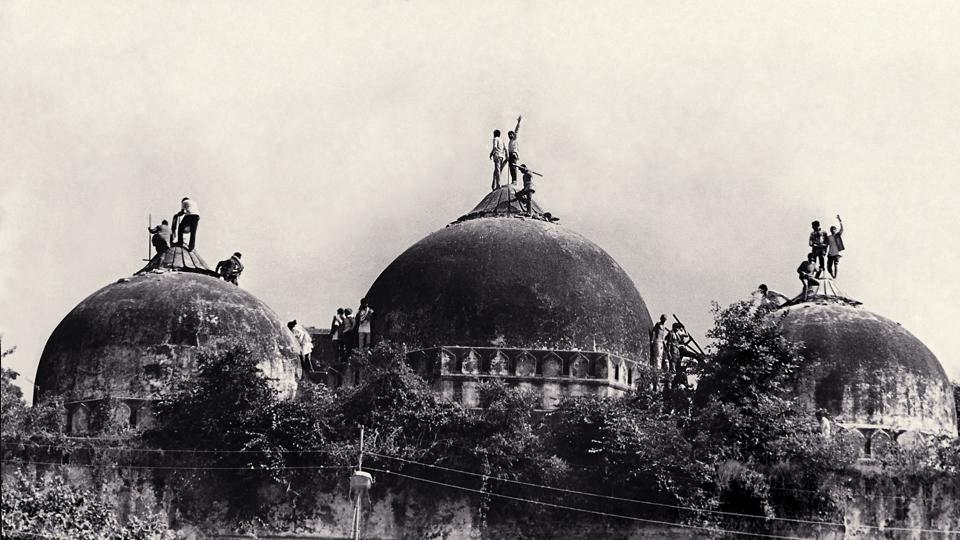
What makes ‘Jai Shri Ram’ different from social greetings like ‘Namaste’ and ‘As-Salaam-Alaikum’, religious chants like ‘Jai Mata Di’ and ‘Allahu Akbar’, political slogans like ‘Jai Bheem’ and ‘Inquilab Zindabad’? It is undeniable that in certain contexts it is uttered with political, religious, and social connotations. It is equally undeniable that in certain other contexts, it has been uttered before demolition of religious structures to encourage fanatics, during riots as a war cry, and after hate speeches to instigate the masses.
However, other slogans have had such a genealogy as well. There is nothing intrinsic to a slogan that makes it violent. Yet, in the present political discourse of India, ‘Jai Shri Ram’ seems to have a role cut out for itself, a role that makes it different from all other analogous utterances. The role is one of imposition. Those who wish to either drown their enemies (I consciously avoid the term ‘opponents’) in the chants of ‘Jai Shri Ram’ or coerce them into chanting the same are essentially aiming to derive some perverse pleasure out of this whole exercise. These are attempts of not just deafening and devoicing ‘others’ but also of forcing their will on them. Fundamentally, these have become acts of destroying consent, both social and individual.
The slogan, ‘Jai Shri Ram’ is simultaneously an assertion of the ‘Hindutva’ agenda of one-nation, one-community, and one identity and that of cow-belt hyper-nationalism. It also serves the purpose of creating a mass euphoria so as to divert attention from the failing economic and social sectors. The slogan claims to be the harbinger of a ‘Ramrajya’ (which, going by its depiction in the story of ‘Shambuka Vadha’ in the Uttara Kanda of Valmiki Ramayana, was by no means an ideal state for the marginalized) which seems to be perpetually deferred from being realized in order for the slogan to retain its mobilizational potency against ‘enemies of the state’.
It is not the content but the form of the slogan that is no longer innocuous. The words comprising the slogan are empty signifiers in other contexts. However, when uttered with the motive of forcing it down people’s ears or up their throats, they become instruments of a verbal violence that brutalizes its victims and denies them any agency whatsoever. When perpetrated by a mob, those words constitute nothing short of an act of verbal mob-lynching. ‘Jai Shri Ram’ has thus become a symbol of the aspiration of the ruling party to achieve and exercise dominance without hegemony in post-colonial India.
 Lokayata
Excellent piece of analysis of present political practices.
LikeLike